Category: Home Design & Organization

Intentional approaches to creating organized, calming, and supportive living spaces.

  • Creating an Outdoor Sanctuary: Balcony and Garden Ideas for Serenity

    Creating an Outdoor Sanctuary: Balcony and Garden Ideas for Serenity

    Creating an Outdoor Sanctuary: Balcony and Garden Ideas for Serenity

    The Forgotten Concrete Balcony

    Look at your apartment balcony, back patio, or porch right now: A gray, cold concrete slab holding a dead potted plant, an old bicycle with flat tires, and a broken plastic folding chair covered in street soot. You never step outside. You live inside air-conditioned drywall rooms, looking out at the sky through a pane of glass.

    Human biology was designed to feel the natural morning breeze, absorb natural full-spectrum sunlight, smell living soil, and hear birdsong. Spending time in an outdoor green space lowers sympathetic nervous system arousal, resets your circadian rhythm, and restores mental clarity. You do not need a 5-acre estate to experience the healing power of nature.

    With simple, intentional upgrades, a tiny 5×8-foot concrete balcony can become your favorite sanctuary in the world.

    4 Upgrades for an Outdoor Sanctuary

    1. Cover Cold Concrete with Wood or Textiles

    • Snap together interlocking acacia wood deck tiles (available at IKEA or hardware stores). They install in 20 minutes without tools and instantly transform cold gray concrete into warm wooden decking.
    • Layer a soft, weather-resistant outdoor patterned rug over top.

    2. Multi-Level Living Greenery & Fragrant Herbs

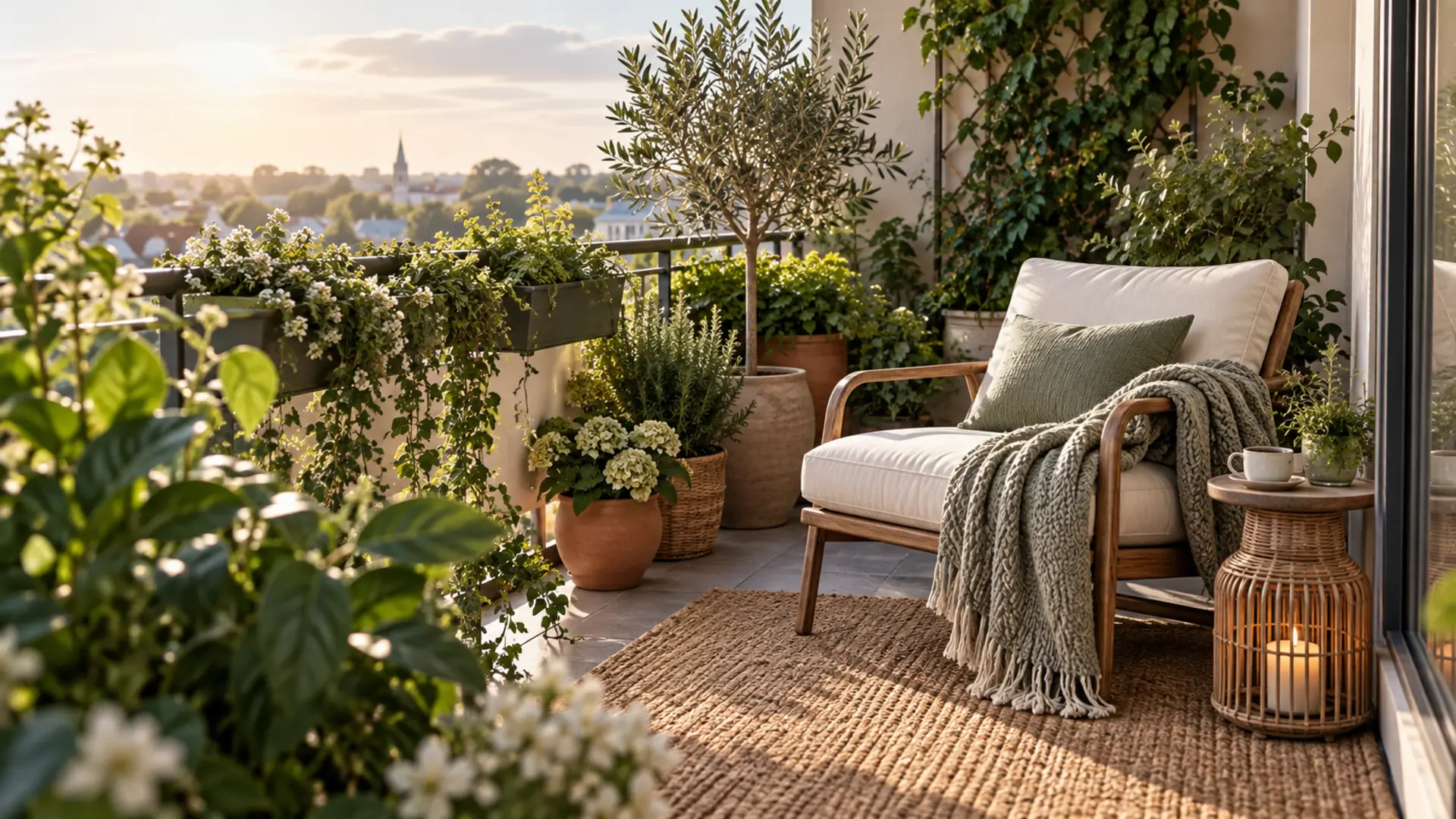
    • Line your railing with planter boxes filled with fragrant tactile herbs (rosemary, sweet basil, mint, and English lavender).
    • Place a tall potted bamboo or climbing jasmine trellis to create natural green privacy from neighbors.

    3. Dedicated Comfortable Seating

    • Replace flimsy folding chairs with a deep, comfortable rattan armchair with thick weather-resistant cushions and a cozy outdoor throw blanket.
    • Add a small side table for your morning coffee mug and notebook.

    4. Solar Warm Lighting & Acoustic Water Calm

    • String warm-white solar fairy lights along the balcony railing.
    • Add a tiny solar-powered desktop water fountain to mask distant traffic noise with the peaceful sound of running water.

    Real-World Case Study: The 5×8 Balcony Oasis

    A remote worker living in a tiny downtown studio apartment felt trapped inside sterile drywall walls, suffering from cabin fever and seasonal fatigue. She transformed her tiny concrete balcony into an Outdoor Sanctuary:

    • She laid interlocking acacia wood deck tiles over the cold gray concrete floor in 15 minutes.
    • She lined the railing with planter boxes of fragrant rosemary, lavender, and mint.
    • She added a cushioned wicker armchair, a small tea table, and warm solar string lights.

    Her balcony became her private morning meditation den, boosting her mood and providing an essential daily dose of fresh air and sunlight.

    3 Rules for an Outdoor Sanctuary

    1. Cover cold concrete surfaces with warm wooden deck tiles and outdoor rugs.
    2. Surround your seating with lush, fragrant container herbs and privacy plants.
    3. Layer soft 2200K solar ambient lighting and bubbling water sounds.

    The Living Peace of the Open-Air Sanctuary

    Stepping into living nature restores the human spirit. Transform your outdoor space, breathe in the fresh air, and let nature heal your mind every day.

    Savoring the Fresh Air of the Balcony Oasis

    Step into the sunlight and breathe in the breeze. Care for your herbs, enjoy your coffee, and let your outdoor sanctuary restore your spirit.

    The Timeless Haven of the Green Balcony

    Nature heals the soul. Step outside, enjoy your living plants, and let the gentle breeze carry away your daily worries.

    Practical Reflection on Outdoor Serenity

    Step onto your balcony or patio today with a warm mug of tea. Breathe in the fresh air, notice the natural sky, and let nature heal your mind.

    3 Core Commitments to an Outdoor Sanctuary

    Summary of the Outdoor Sanctuary Blueprint

    • Transform concrete balconies and patios into lush biophilic living havens.
    • Layer interlocking wood tiles, weather-resistant rugs, and fragrant container herbs.
    • Add comfortable deep seating and warm solar lighting to create evening peace.

    Frequently Asked Questions

    How can you make a small concrete balcony feel cozy?

    Use interlocking wooden deck tiles, an outdoor rug, lush potted plants, warm solar string lights, and a comfortable cushioned armchair.

    What are the best plants for apartment balcony sanctuaries?

    Lavender, rosemary, mint, snake plants, Japanese maples in large pots, and climbing ivy or jasmine on privacy trellises.

    How do you create privacy on an open balcony?

    Install bamboo reed fencing rolls, tall potted plants, or outdoor linen privacy curtains along the railings.

    What lighting works best for outdoor patios at night?

    Warm 2200K solar-powered string lights, solar lanterns, and natural beeswax candles in glass hurricane holders.

    How does spending 20 minutes outside in the morning improve sleep?

    Early natural morning sunlight hits retinal ganglion cells, synchronizing your circadian clock and boosting nighttime melatonin production.

    Can you have an outdoor sanctuary in cold climates?

    Yes. Add an outdoor wool blanket, a small propane tabletop fire heater, and evergreen container shrubs.

    How do you mask city traffic noise on a balcony?

    Use a small bubbling water fountain, wind chimes, and dense foliage to diffuse acoustic city noise.

    What is the single best DIY upgrade for a balcony this weekend?

    Install interlocking wood deck tiles over the concrete floor and add two fragrant potted herbs.

  • Mindful Hosting: How to Entertain Guests Without High Stress

    Mindful Hosting: How to Entertain Guests Without High Stress

    Mindful Hosting: How to Entertain Guests Without High Stress

    The Sweat-Drenched Kitchen Host Trap

    You invited six friends over for dinner on Saturday at 7:00 PM: You have spent the entire day in a state of high anxiety: scrubbing baseboards with a toothbrush, hiding laundry in closets, and attempting to cook a complex French recipe with fourteen ingredients. When the doorbell rings, you are sweating through your shirt, frantically chopping herbs, and burning the sauce. For the next three hours, you are trapped in the kitchen washing pans while your guests sit in the living room without you.

    You collapse in bed at midnight, exhausted and resentful, vowing: “I am never hosting people again.” Author Shauna Niequist made a profound distinction between two words: > “Entertaining is about impressing people with your home, your cooking, and your performance. Hospitality is about creating a safe, warm space where people feel nourished and loved.” Nobody remembers if your crown molding was dusted or if your dessert was homemade.

    Guests remember how you made them feel. If the host is frantic and stressed, guests feel anxious. If the host is relaxed, barefoot, and holding a glass of wine, guests feel instantly at home.

    4 Rules of the Mindful Host

    1. The ‘Zero-Last-Minute-Cooking’ Menu

    Never cook meals that require standing over a hot stove while guests are in your home (like searing steaks or stir-frying):

    • Serve One-Pot Slow-Cooker Meals (a hearty Tuscan white bean stew, slow-braised pork carnitas, or baked lasagna).
    • The entire dinner is done at 5:00 PM, simmering in the pot, leaving you free to relax.

    2. Dim the Lights (The Instant Decor Upgrade)

    Turn off harsh overhead lights. Light five inexpensive candles and turn on warm table lamps.

    • Soft amber lighting creates an instant hygge atmosphere and makes any domestic clutter invisible.

    3. Put Guests to Work

    When guests arrive and ask “What can I do to help?”, never say “Oh nothing, just sit down!”

    • Hand them a corkscrew and a bottle of wine, or ask them to slice a baguette. Helping immediately breaks social ice and makes guests feel like family.

    4. Serve Store-Bought Staples with Pride

    Buy a bakery sourdough loaf, good olive oil, and gourmet gelato for dessert. Delicious food does not require suffering.

    Real-World Case Study: The Slow-Cooker Dinner Party

    An introverted graphic designer avoided hosting dinner parties for years because the stress of cooking multi-course meals while entertaining left her in tears. She implemented the Mindful Host Protocol:

    • She slow-cooked a rich Tuscan beef stew in her crockpot starting at noon.
    • At 6:00 PM, she took a relaxing bath, put on linen clothes, dimmed the lights, and lit four candles.
    • When guests arrived at 7:00 PM, she handed them a bottle of wine to uncork and sliced a bakery baguette.

    She spent the entire evening laughing on the sofa with her guests, completely relaxed, and realized hosting could be an effortless joy.

    3 Rules for Low-Stress Hospitality

    1. Cook one-pot slow-cooker meals completely in advance.
    2. Dim overhead lights and light candles to create an instant cozy mood.
    3. Invite guests to open wine and slice bread to break social ice naturally.

    The Timeless Joy of Mindful Hospitality

    The best dinner parties leave guests feeling loved, nourished, and relaxed. Slow down your cooking, dim the lights, and enjoy the rich beauty of human connection.

    The Freedom of the Relaxed Host

    When the host is calm and present, guests feel completely at home. You don’t need a spotless house or a 5-course menu; you simply need warm lighting, simple food, and an open heart.

    Savoring the Flow of the Welcoming Home

    Hospitality is an open door and a relaxed heart. Savor your food, laugh with your guests, and let your home be a place of genuine connection.

    The Boundless Joy of Simple Hospitality

    True hospitality gives the gift of rest. Serve with love, enjoy your guests, and let your table be an oasis of laughter.

    Practical Reflection on Mindful Hospitality

    When you host friends this weekend, focus on connection over perfection. Cook in advance, dim the overhead lights, and enjoy your time together.

    3 Core Commitments to Low-Stress Hospitality

    Summary of the Mindful Hosting Blueprint

    • Trade the stress of ‘entertaining’ for the warmth and presence of true ‘hospitality.’
    • Slow-cook one-pot meals in advance to eliminate last-minute kitchen chaos.
    • Dim overhead lights, light candles, and invite guests to participate in simple prep.

    Frequently Asked Questions

    What is the difference between hospitality and entertaining?

    Entertaining focuses on showcasing your home and cooking to impress; hospitality focuses on welcoming guests and making them feel comfortable and loved.

    What are the best low-stress dinner party meals?

    One-pot slow-cooked stews, taco bars, baked pasta dishes, and large Mediterranean mezze platters prepped ahead of time.

    How can introverts host without burning out?

    Keep guest lists small (4 to 6 people), set an upfront end time, and prep all food 2 hours before guests arrive.

    How clean does your house actually need to be for guests?

    Clean the bathroom and wipe the kitchen counter; guests care about warmth and connection, not spotless baseboards.

    How do you handle guests with complex dietary restrictions?

    Serve customizable buffet-style meals (like grain bowls or taco bars) where guests assemble their own plates according to their dietary needs.

    What music is best for dinner parties?

    Acoustic folk, bossa nova, or classic instrumental jazz played at low volume so conversation flows effortlessly.

    How do you politely wrap up a dinner party when it gets late?

    Start clearing dessert plates, turn on a soft porch light, and say warmly: ‘This was such a wonderful night! Thank you all so much for coming!’

    What is the single best hosting shortcut?

    Buy a great bakery dessert and slow-cook the main meal four hours before guests arrive.

  • Designing a Reading Nook That Encourages Daily Focus and Stillness

    Designing a Reading Nook That Encourages Daily Focus and Stillness

    The Tragic Plight of the Unread Bookshelf

    Look at your nightstand or bookshelf: You have a stack of eight brilliant books you bought with high hopes: philosophy, gripping novels, inspiring biographies, and history. Yet every evening, you get into bed with a book in your hand, read two pages, feel your phone buzz on your mattress, and spend the next hour scrolling social media feeds. You tell yourself: “My attention span is ruined.

    I don’t have the discipline to read anymore.” James Clear proved a core psychological law in Atomic Habits: Environment is the invisible hand that shapes human behavior. If you try to read in bed where you also watch Netflix, check work email, and scroll Instagram, your brain is primed for digital distraction. Creating a Dedicated Reading Nook is the physical commitment that turns reading from an uphill battle into an irresistible daily joy.

    4 Anatomy Pillars of a Perfect Reading Sanctuary

    1. The Dedicated Ergonomic Chair

    You do not need a huge room. Any unused 4×4-foot corner will work:

    • Choose a deep, supportive armchair with good lower-back support and armrests.
    • Pair it with a small ottoman or footrest to elevate your legs and relax your spine.

    2. Focused 2700K Warm Task Lighting

    • Avoid harsh overhead ceiling lights.
    • Position a dedicated gooseneck floor lamp directly behind the chair, casting a warm, targeted pool of amber light directly over your book.

    3. The Drink and Tool Side Table

    Keep a tiny side table next to the chair:

    • A ceramic coaster for your hot herbal tea or coffee.
    • A small dish with highlighters, book tabs, and a reading pen.

    4. The Non-Negotiable ‘No Screens’ Law

    Establish a sacred household standard: Smartphones, laptops, and tablets are never allowed inside the reading chair.

    • When your body sits in that chair, your brain knows there is only one option: sink into the page.

    Real-World Case Study: The Hallway Closet to Reading Nook

    A busy software engineer wanted to read 24 books a year but found herself scrolling Twitter in bed every night for two hours. She transformed an unused 4×4-foot corner under her stairs into a Dedicated Reading Sanctuary:

    • She installed a deep velvet armchair with an ottoman and a 2700K brass task lamp.
    • She added a small wooden side table for her evening chamomile tea and reading glasses.
    • She instituted the Sacred Rule: zero smartphones or digital screens within 5 feet of the chair.

    She read 32 books that year, cured her evening insomnia, and looked forward to her 45-minute reading sanctuary session all day.

    3 Rules for a Focused Reading Sanctuary

    1. Dedicate a specific, comfortable physical corner exclusively to analog reading.
    2. Position directional warm task lighting (2700K) directly over your pages.
    3. Ban all digital screens, smartphones, and laptops from the reading chair.

    The Timeless Joy of the Analog Sanctuary

    A reading nook is an open door to wisdom, adventure, and stillness. Sit in your cozy chair, turn the physical pages, and let your mind expand in peaceful focus.

    The Neurobiology of the Reading Sanctuary

    When you sit in a chair dedicated purely to books, your brain stops craving digital dopamine. You enter a calm flow state of “Deep Reading,” which strengthens empathy, improves memory, and dramatically expands your vocabulary.

    3 Rules for the Reading Nook

    1. Designate a comfortable chair strictly for physical books.
    2. Use warm 2700K task lighting to create an intimate pool of light.
    3. Keep all smartphones, tablets, and laptops completely out of reach.

    Savoring the Flow of the Analog Nook

    A cozy reading nook is a portal to peace. Open a classic book, turn off the digital noise, and let your spirit rest in focused stillness.

    The Eternal Joy of the Written Word

    Books hold timeless wisdom and quiet comfort. Savor your reading sanctuary, turn the pages, and let your imagination take flight.

    Practical Reflection on Your Reading Sanctuary

    Sit in your reading chair tonight for 30 minutes with a physical book. Feel the weight of the paper and the quiet joy of deep, uninterrupted focus.

    3 Core Commitments to the Reading Sanctuary

    Summary of the Reading Sanctuary Blueprint

    • Prime your brain for deep analog reading with an intentional, dedicated nook.
    • Position warm 2700K task lighting directly over your book with a drink table.
    • Ban all smartphones and tablets from the reading chair to eliminate distraction.

    Savoring the Joy of the Focused Reading Nook

    3 Reading Nook Truths

    1. Dedicated physical reading chairs prime the brain for deep focus.
    2. Directional 2700K task lighting illuminates pages without harsh glare.
    3. Banning screens from the reading corner eliminates digital temptation.

    Reclaiming Analog Focus

    The Eternal Treasure of the Written Word

    The Sacred Stillness of the Reading Corner

    A good book in a quiet chair is one of life’s purest joys. Turn off the noise, open the page, and discover boundless wonder.

    The Boundless Wonder of the Reading Sanctuary

    Summary of the Reading Nook Playbook

    • Dedicate a comfortable corner strictly to physical books.
    • Position warm 2700K task lighting directly over your book pages.
    • Ban all smartphones and tablets from the reading sanctuary chair.

    Frequently Asked Questions

    Why does having a dedicated reading nook help you read more?

    Because it creates an unambiguous physical cue that primes your brain for deep analog focus and eliminates competing digital distractions.

    What is the best lighting for a reading nook?

    Warm, directional task lighting (2700K to 3000K) positioned above or behind your shoulder to illuminate the pages without glare.

    Can you build a reading nook in a small studio apartment?

    Yes. A compact armchair, a floor lamp, and a small throw blanket in an unused corner create an intimate sanctuary in minimal space.

    What type of chair is best for long reading sessions?

    A comfortable armchair with firm lumbar support, wide armrests, and an ottoman for foot elevation.

    How does keeping phones away from the reading chair improve focus?

    By removing the cognitive temptation of notifications, allowing your brain to enter a deep state of flow.

    What accessories make a reading corner cozier?

    A 100% wool or chunky knit throw blanket, linen lumbar pillows, a small bookshelf, and a living green plant.

    How much time should you spend in your reading nook daily?

    Even 20 to 30 minutes of uninterrupted daily reading creates rich intellectual and emotional restoration.

    What is the single best change to make tonight?

    Pick one quiet corner of your home, place a comfortable chair and lamp there, and designate it a 100% phone-free zone.

  • The Healing Power of Silence: Introducing Quiet Hours into Your Home

    The Healing Power of Silence: Introducing Quiet Hours into Your Home

    The Chronic Low-Grade Hum of Modern Domestic Noise

    Think about the soundscape of your home right now: The television blares a news broadcast in the background that nobody is watching. The dishwasher hums aggressively. The refrigerator compressor buzzes.

    Someone is watching TikTok videos on speakerphone in the hallway. Notifications ping on four different smartphones. We live in a state of Chronic Auditory Assault.

    Human biology did not evolve in environments with 24/7 synthetic sound. When your ears are continuously bombarded by low-grade background noise, your brain stays in a permanent, low-level fight-or-flight alert state, elevating resting cortisol and triggering irritability. In a landmark neurobiological study led by researcher Imke Kirste at Duke University, scientists discovered that two hours of complete silence per day stimulated the development of new brain cells (Neurogenesis) in the hippocampus—the brain region responsible for learning, memory, and emotion regulation.

    Silence is not empty space; it is the biological womb of mental restoration.

    4 Steps to Implement Household Quiet Hours

    1. Designate the 60-Minute ‘Golden Silence’

    Pick a predictable window every evening—such as 8:00 PM to 9:00 PM:

    • Turn off all televisions, podcasts, music, and gaming consoles.
    • Let the house settle into pure, natural stillness.

    2. Embrace Parallel Quiet Living

    During quiet hours, family members engage in silent, restorative analog activities together:

    • Reading books by warm lamp light.
    • Journaling, sketching, or watercolor painting.
    • Doing jigsaw puzzles or gentle stretching on a rug.

    3. Soften the Acoustic Environment

    Hard drywall and hardwood floors amplify domestic noise. Add thick wool area rugs, heavy linen curtains, and plush cushions to absorb acoustic reverberation.

    4. Step Outside into Natural Silence

    Spend 10 minutes sitting on your porch or backyard in the dark, listening to the natural wind and crickets.

    Real-World Case Study: The 8:00 PM Golden Silence

    A family of four living in a suburban home felt chronically overstimulated by constant television noise, iPad games, and Alexa notifications, leading to nightly sibling fights and bedtime meltdowns. They instituted the 60-Minute Acoustic Sanctuary:

    • Every evening at 8:00 PM, an alarm chimed signaling the start of “Golden Silence.”
    • All screens were turned off, and the house lights were dimmed to warm amber lamps.
    • The parents read physical books on the sofa while the children did watercolor painting and puzzles on the carpet in complete silence.

    Within two weeks, bedtime battles vanished, both children fell asleep within 15 minutes, and the parents felt deeply restored every single evening.

    3 Rules for Domestic Silence

    1. Establish a predictable daily 60-minute window of complete household quiet.
    2. Power down background televisions and auditory appliance alerts.
    3. Embrace parallel quiet activities (reading, sketching, puzzles) that heal the mind.

    The Sacred Sanctuary of the Silent Home

    In true silence, your brain heals, restores its neural pathways, and finds profound peace. Protect your quiet hours, dim the lights, and let stillness renew your life.

    The Acoustic Biology of Quiet Healing

    When your home is silent, your sensory system stops filtering auditory threats. Your heart rate variability increases, your digestive system enters restorative rest, and your mind settles into peaceful equilibrium.

    Savoring the Peace of the Quiet Sanctuary

    Silence is medicine for the modern soul. Protect your quiet hours, dim the lights, and let stillness renew your life and mind.

    The Sacred Truth of Domestic Stillness

    In quiet rest, the soul finds its rhythm. Embrace the silence, breathe deeply, and let your home be an oasis of restorative peace.

    Practical Reflection on Household Silence

    Set aside 45 minutes tonight for complete domestic quiet. Turn off all screens, light a candle, and let your home settle into restorative peace.

    3 Core Commitments to Domestic Silence

    Summary of the Domestic Silence Blueprint

    • Overcome auditory sensory fatigue by scheduling daily 60-minute quiet hours.
    • Power down background televisions, appliances, and smartphone alert chimes.
    • Engage in parallel quiet crafts (reading, sketching, puzzles) that heal the mind.

    Savoring the Peace of the Quiet Den

    3 Silence Truths

    1. Two hours of silence stimulates neurogenesis in the hippocampus.
    2. Daily quiet hours lower resting blood pressure and reduce anxiety.
    3. Acoustic sanctuaries allow families to rest in deep, restorative calm.

    Reclaiming the Wonder of Stillness

    The Sacred Truth of Domestic Quiet

    The Endless Beauty of Quiet Living

    In true silence, your home becomes a sacred sanctuary of peace. Embrace the quiet moments and let stillness restore your heart.

    The Timeless Magic of Household Silence

    Summary of the Domestic Silence Playbook

    • Overcome auditory fatigue by scheduling daily 60-minute quiet hours.
    • Power down background televisions, appliances, and device alerts.
    • Engage in parallel quiet crafts (reading, sketching, puzzles) that heal.

    Frequently Asked Questions

    How does silence benefit brain health?

    Silence promotes neurogenesis (growth of new brain cells in the hippocampus), lowers resting blood pressure, and allows the default mode network to consolidate memories.

    What is ‘Acoustic Noise Pollution’ in the home?

    The constant background hum of TVs, appliances, traffic, and phone notifications that keeps the nervous system stressed.

    How can families with young kids implement quiet hours?

    Frame it as ‘cozy reading time’ after dinner: dim the lights, put on soft pajamas, and read picture books in silence.

    Why does complete silence feel uncomfortable at first?

    Because people used to constant stimulation face their inner thoughts and unresolved anxiety when external distractions stop.

    How long should daily quiet hours last?

    Even 30 to 60 minutes of intentional household quiet provides massive neurological and emotional benefits.

    Can listening to white noise replace silence?

    While white noise masks disruptive sounds for sleep, true acoustic silence is uniquely effective for deep cognitive restoration.

    How does household silence improve sleep quality?

    By allowing cortisol levels to drop naturally and signaling to the pineal gland that the environment is safe for deep sleep.

    What is the single best action to take tonight?

    Turn off the living room television at 8:00 PM and spend 45 minutes reading in complete silence.

  • Designing an Inviting Living Room for Rest, Reading, and Connection

    Designing an Inviting Living Room for Rest, Reading, and Connection

    The Tragedy of the TV-Altar Living Room

    Walk into 90% of suburban homes, and you will see the exact same layout: A giant, black 75-inch television mounted directly in the center of the room like a pagan altar. All sofas, recliners, and chairs are bolted in place facing the black screen in a theater formation. There are no cozy lamps, no accessible books, and no way for two human beings to sit face-to-face without craning their necks.

    Environmental psychologists prove a fundamental law of human behavior: Your physical environment silently dictates your daily habits. If your living room is arranged like a cinema, you will watch four hours of television every night. If your living room is arranged around soft lighting, comfortable books, and face-to-face seating, you will read, talk, laugh, and rest.

    4 Principles to Design a Restorative Living Room

    1. Arrange for Conversation (Face-to-Face)

    • Position your sofa and accent chairs facing each other in an intimate U-shape or circular formation around a central coffee table.
    • This encourages natural eye contact, shared board games, and lively dialogue.

    2. Dethrone the Black Screen

    • If you have a TV, mount it on a secondary wall or use a picture-frame television that displays classic artwork when not in use.
    • Never make the television the undisputed focal point of the room.

    3. Banish the ‘Big Overhead Light’

    • Harsh ceiling lights trigger alertness and stress.
    • Use Layered 2700K Warm Amber Lighting: three floor lamps and table lamps placed at eye level around the perimeter of the room to create cozy pools of soft light.

    4. Create a Dedicated Reading Nook

    • Position a deep, comfortable armchair near a window with a dedicated reading lamp, a warm wool throw blanket, and a small side table for tea.

    Real-World Case Study: The Hygge Living Room Transformation

    A young couple’s living room felt like a cold, uninviting cinema: a giant television was the only focal point, with harsh fluorescent ceiling lights and no comfortable reading spots. They redesigned the room for human connection:

    • They rearranged the sofa and two armchairs into an intimate face-to-face circle around a wooden table.
    • They turned off the overhead ceiling fixture and installed three warm 2700K amber floor lamps.
    • They created a cozy reading nook with a wool blanket and stacks of classic literature.

    Their TV watch time dropped by 60%, and they spent their evenings reading, playing chess, and having rich conversations with visiting friends.

    3 Rules for a Connected Living Space

    1. Arrange seating face-to-face in an intimate circle rather than facing a screen.
    2. Use layered warm amber lighting at eye level instead of harsh ceiling bulbs.
    3. Incorporate natural tactile textures (wool, linen, solid wood) to promote calm.

    The Timeless Warmth of the Connected Home

    A living room should welcome the soul and foster human connection. Layer your soft lighting, arrange your seating with love, and enjoy your peaceful haven.

    The Psychology of the Restorative Home

    Your living room should be an embrace for your nervous system at the end of a long day. When you prioritize face-to-face connection and warm amber lighting over television screens, your home becomes an unshakeable haven of peace.

    3 Rules for Sanctuary Living

    1. Arrange seating in conversational face-to-face circles.
    2. Dethrone the television and layer warm 2700K ambient lighting.
    3. Create dedicated cozy reading corners with natural textiles and books.

    Savoring the Warmth of the Cozy Den

    Your home is your sanctuary. Dim the overhead lights, curl up with a good book, and enjoy the deep comfort of your space.

    The Timeless Haven of the Connected Room

    Design your home for love and laughter. Arrange your space with intention, savor your cozy nooks, and enjoy a peaceful sanctuary.

    Practical Reflection on Sanctuary Living

    Turn off your overhead ceiling light tonight. Turn on soft amber lamps, open a classic book, and let your living room hold you in peaceful comfort.

    3 Core Commitments to Sanctuary Design

    Summary of the Restorative Living Room Blueprint

    • Arrange sofas and chairs face-to-face in conversational circles rather than theater rows.
    • Dethrone the television as the central focal point using artwork or side mounting.
    • Layer warm 2700K amber lighting and create dedicated cozy reading sanctuaries.

    Savoring the Warmth of the Cozy Living Room

    Design your home for love, rest, and connection. Turn off the big light, curl up with a book, and enjoy your peaceful haven.

    3 Restorative Design Truths

    1. Face-to-face conversational seating encourages rich human dialogue.
    2. Dethroning the television allows books, games, and rest to take center stage.
    3. Layered warm amber lighting creates an oasis of evening peace.

    Reclaiming Domestic Serenity

    A cozy living room welcomes the heart. Layer soft amber lights, open a great book, and enjoy your peaceful den.

    The Sanctuary of Human Connection

    Create space for dialogue and rest. When your home is built for connection, every evening feels like a warm embrace.

    Reclaiming the Warmth of the Cozy Home

    Summary of the Restorative Living Room Playbook

    The Living Dignity of the Sanctuary Home

    Summary of the Sanctuary Living Room Playbook

    • Arrange seating face-to-face in conversational circles.
    • Dethrone the television and layer warm 2700K ambient lighting.
    • Create dedicated cozy reading corners with natural textiles.

    Frequently Asked Questions

    How does living room furniture layout affect social interaction?

    Furniture arranged face-to-face promotes conversation and eye contact, whereas furniture arranged toward a screen forces passive silence.

    What color temperature of lighting is best for living room relaxation?

    Warm amber lighting between 2200K and 2700K promotes melatonin production and signals psychological safety.

    How can you hide or minimize a large television in a living room?

    Use an art-frame TV, hide the screen inside a cabinet with doors, or place it on a secondary side wall.

    What is ‘Hygge’ interior design?

    The Danish philosophy of creating cozy, warm, and comforting living spaces using candles, natural wood, tactile blankets, and shared tea.

    How does a dedicated reading nook encourage more reading?

    By creating an inviting, designated physical cue that makes sitting down with a book effortless and appealing.

    What materials make a living room feel most welcoming?

    Natural fibers: wool throws, linen cushions, solid wood tables, ceramic mugs, and living green houseplants.

    Can small apartments have conversational seating?

    Yes. Using a small loveseat and two compact accent chairs angled toward each other creates an intimate conversational zone in minimal square footage.

    What is the single best change to make to your living room tonight?

    Turn off the overhead ceiling light and turn on two soft table lamps with warm bulbs.

  • The Calming Effect of Bringing Nature Indoors: Houseplants and Well-Being

    The Calming Effect of Bringing Nature Indoors: Houseplants and Well-Being

    The Sterile Concrete Box Syndrome

    Look at the environment where you spend 90% of your waking life: Drywall painted sterile gray, synthetic carpet, plastic furniture, and fluorescent LED ceiling bulbs. You stare at glowing digital screens for eight hours, surrounded by hard geometric angles and synthetic materials. For 99.9% of human evolutionary history, our ancestors lived immersed in living green canopies, rich soil, running water, and natural sunlight.

    When we isolate our biology inside lifeless drywall boxes, our nervous systems experience Nature Deficit Disorder—leading to chronic cognitive fatigue, elevated stress hormones, and restless anxiety. In his groundbreaking scientific framework, biologist E.O. Wilson introduced The Biophilia Hypothesis: > Human beings have an innate, genetically hardwired biological affinity for the natural, living world.

    Bringing living plants into your home is not a decorative trend; it is an essential neurological medicine for the modern soul.

    3 Neurological Benefits of Indoor Greenery

    1. Rapid Cortisol and Blood Pressure Reduction

    In a landmark Japanese study published in the Journal of Physiological Anthropology, researchers found that interacting with indoor plants significantly suppressed sympathetic nervous system activity and lowered blood pressure compared to performing computer tasks.

    2. Attention Restoration (Kaplan’s Theory)

    Staring at screens requires “Directed Attention,” which quickly depletes working memory. Looking at the organic fractals and natural greens of plant leaves triggers “Soft Fascination,” allowing your prefrontal cortex to replenish its focus.

    3. The Mindfulness of Plant Care

    Wiping dust from leaves, checking soil moisture, and watching a new leaf unfurl provides a grounding, analog rhythm of patience that pulls you out of frantic digital rushing.

    5 Indestructible Plants for Beginner Wellness

    1. Snake Plant (Sansevieria): Thrives on neglect, tolerates low light, and releases oxygen at night.
    2. Golden Pothos: Rapidly trailing green vines that tolerate irregular watering.
    3. ZZ Plant (Zamioculcas zamiifolia): Glossy, sculptural green leaves that survive in dark rooms.
    4. Peace Lily: Elegant dark leaves that visibly droop when thirsty, communicating clearly.
    5. Monstera Deliciosa: Dramatic tropical leaves with Swiss-cheese perforations that bring lush jungle energy into any room.

    Real-World Case Study: The Basement Office Green Sanctuary

    A graphic designer working in a dark basement home office was suffering from severe afternoon brain fog, eye strain, and mild seasonal depression. He implemented the Biophilic Home Sanctuary Blueprint:

    • He placed a large Snake Plant on his left and a cascading Golden Pothos on a shelf above his monitor.
    • He added a full-spectrum daylight lamp and a desktop ZZ plant.
    • He dedicated 3 minutes every morning to checking soil moisture and misting leaves.

    Within three weeks, his afternoon headaches vanished, his creative focus surged, and his workspace transformed from a cold cave into an inspiring living oasis.

    3 Rules for Biophilic Living

    1. Place 3 to 5 living houseplants in the rooms where you spend the most time.
    2. Choose indestructible low-light plants (Snake Plant, Pothos, ZZ Plant) if you are a beginner.
    3. Treat plant care as a grounding daily mindfulness ritual away from screens.

    The Sacred Sanctuary of Living Greenery

    When you surround yourself with living nature, your home becomes an oasis of peace. Care for your plants, breathe in the fresh air, and let nature heal your mind.

    The Sensory Architecture of Biophilic Design

    Plants do more than clean air; they provide organic fractals that soothe the human nervous system. When you glance away from your computer screen to look at the green leaves of a plant, your ciliary eye muscles relax, resetting your working memory and restoring cognitive stamina.

    3 Rules for Biophilic Wellness

    1. Position plants in your direct field of view while working.
    2. Group plants in small clusters of three to create lush micro-ecosystems.
    3. Use natural terracotta and ceramic planters that ground the senses.

    Savoring the Peace of the Indoor Jungle

    Surround yourself with living green beauty. Care for your plants, breathe deeply, and let nature heal your mind every day.

    The Living Medicine of Nature

    In the presence of green leaves, your spirit restores itself. Embrace the natural world, nurture your plants, and live in serene peace.

    Practical Reflection on Bringing Nature Indoors

    Take a moment to wipe the leaves of a plant in your home today. Notice the deep green fractals and feel your nervous system settle into natural stillness.

    3 Core Commitments to Biophilic Living

    1. Position living houseplants in your direct field of view while working.
    2. Group plants in small clusters of three to create lush micro-ecosystems.
    3. Treat daily plant care as a tactile mindfulness anchor away from screens.

    Summary of the Biophilic Home Blueprint

    • Overcome Nature Deficit Disorder by incorporating living houseplants indoors.
    • Stimulate parasympathetic calming through organic green fractals and daylight.
    • Start with resilient beginner plants like Snake Plants, Pothos, and ZZ Plants.

    Savoring the Living Peace of Nature

    In the presence of living plants, your home breathes peace. Embrace the green world, care for your plants, and let nature nurture your soul.

    3 Biophilic Wellness Truths

    1. Living greenery lowers cortisol and resets depleted attention spans.
    2. Caring for plants provides a grounding tactile rhythm of daily peace.
    3. A few resilient houseplants transform sterile rooms into healing sanctuaries.

    Reclaiming the Wonder of Nature

    In the quiet presence of living greenery, your soul finds rest. Nurture your plants, breathe in the fresh air, and enjoy a peaceful home.

    Reclaiming the Peace of Green Spaces

    The Timeless Magic of Living Nature

    When you bring nature into your home, your soul finds quiet rest. Nurture your green plants, breathe in peace, and let nature heal your mind.

    Summary of the Biophilic Living Playbook

    • Lower cortisol and restore mental focus with living indoor plants.
    • Place resilient greenery in high-traffic work and living spaces.
    • Savor tactile plant care as a grounding daily mindfulness habit.

    Frequently Asked Questions

    How do houseplants reduce stress and anxiety?

    Viewing living greenery stimulates parasympathetic nervous system activity, lowering resting heart rate and cortisol levels.

    What is the Biophilia Hypothesis?

    The evolutionary theory that humans possess an innate biological need to connect with nature and living organisms.

    Do houseplants actually purify indoor air?

    While plants filter small amounts of volatile organic compounds (VOCs), their primary health benefit is psychological and neurological regulation.

    What are the best low-light houseplants for dark apartments?

    Snake plants, ZZ plants, cast-iron plants, and pothos thrive in minimal natural lighting.

    How many plants are needed to feel a psychological benefit?

    Research shows having just 3 to 5 plants in your primary living or work room creates measurable reductions in stress.

    Why does taking care of plants feel therapeutic?

    Because nurturing living organisms provides a mindful, tactile routine that slows down racing thoughts and fosters purpose.

    Are certain houseplants toxic to pets?

    Yes. Peace lilies, pothos, and monsteras can be toxic to cats and dogs if chewed; pet-friendly alternatives include spider plants, Boston ferns, and calatheas.

    What is the single best plant to purchase today?

    A Golden Pothos in a ceramic pot placed directly on your work desk or bedside table.

  • Simple Home Organization Rules That Actually Stick Long-Term

    Simple Home Organization Rules That Actually Stick Long-Term

    The Saturday Cleaning / Tuesday Chaos Cycle

    Think about the exhausting domestic cycle you live every single week: You spend four hours on Saturday cleaning your house. You scrub counters, fold blankets, organize closets, and line up shoes. Your home looks pristine and peaceful.

    By Tuesday afternoon, the chaos returns:

    • Mail piles up on the kitchen island.
    • Coats and backpacks are dumped on chairs.
    • Scissors and tape are missing from drawers.
    • The entryway looks like a hurricane hit it.

    You tell yourself: “I am just a lazy, disorganized person.” The truth is liberating: You are not lazy. Your organization systems are simply designed with too much friction. If putting an item away requires opening a closet, unstacking two plastic bins, taking off a lid, and placing it inside, you will leave that item on the counter every single time.

    A great organization system is designed for the lowest-energy version of yourself at 8:00 PM on a Friday.

    5 Sustainable Rules for Lasting Home Order

    1. The ‘One-Touch’ Rule

    Whenever you pick up an object, touch it only once until it reaches its final resting place:

    • When you take off your coat, hang it in the closet immediately (do not drape it over a chair first).
    • When you open the mail, recycle the junk immediately (do not leave it on the counter to deal with later).

    2. Low-Friction Open Bins

    Ditch complicated organizing systems with tight lids and labels:

    • Use open canvas bins or wicker baskets in high-traffic areas (entryways, living rooms, kids’ playrooms).
    • Tossing shoes, toys, or dog leashes into an open bin takes two seconds and requires zero cognitive effort.

    3. The Point-of-Use Storage Rule

    Store tools at the exact physical location where they are used:

    • Keep scissors and pens in the kitchen where packages are opened, not in a distant basement office.
    • Keep cleaning spray in every bathroom, not just under the kitchen sink.

    4. The 80% Capacity Ceiling

    Never pack a drawer, closet, or shelf past 80% full:

    • When a drawer is 100% full, taking something out creates an avalanche, discouraging you from putting it back.
    • Leave breathing room on every shelf.

    5. The 10-Minute Family Nightly Reset

    Set a timer for 10 minutes at 8:30 PM:

    • Put on upbeat music and have everyone in the house return 5 items to their designated homes.
    • Waking up to clear flat surfaces transforms morning energy.

    Real-World Case Study: The 10-Minute Home Transformation

    A busy family of four with two golden retrievers lived in constant domestic chaos. Saturday cleaning marathons left the parents exhausted, only for the house to be ruined by Monday night. They instituted the Low-Friction Organization Blueprint:

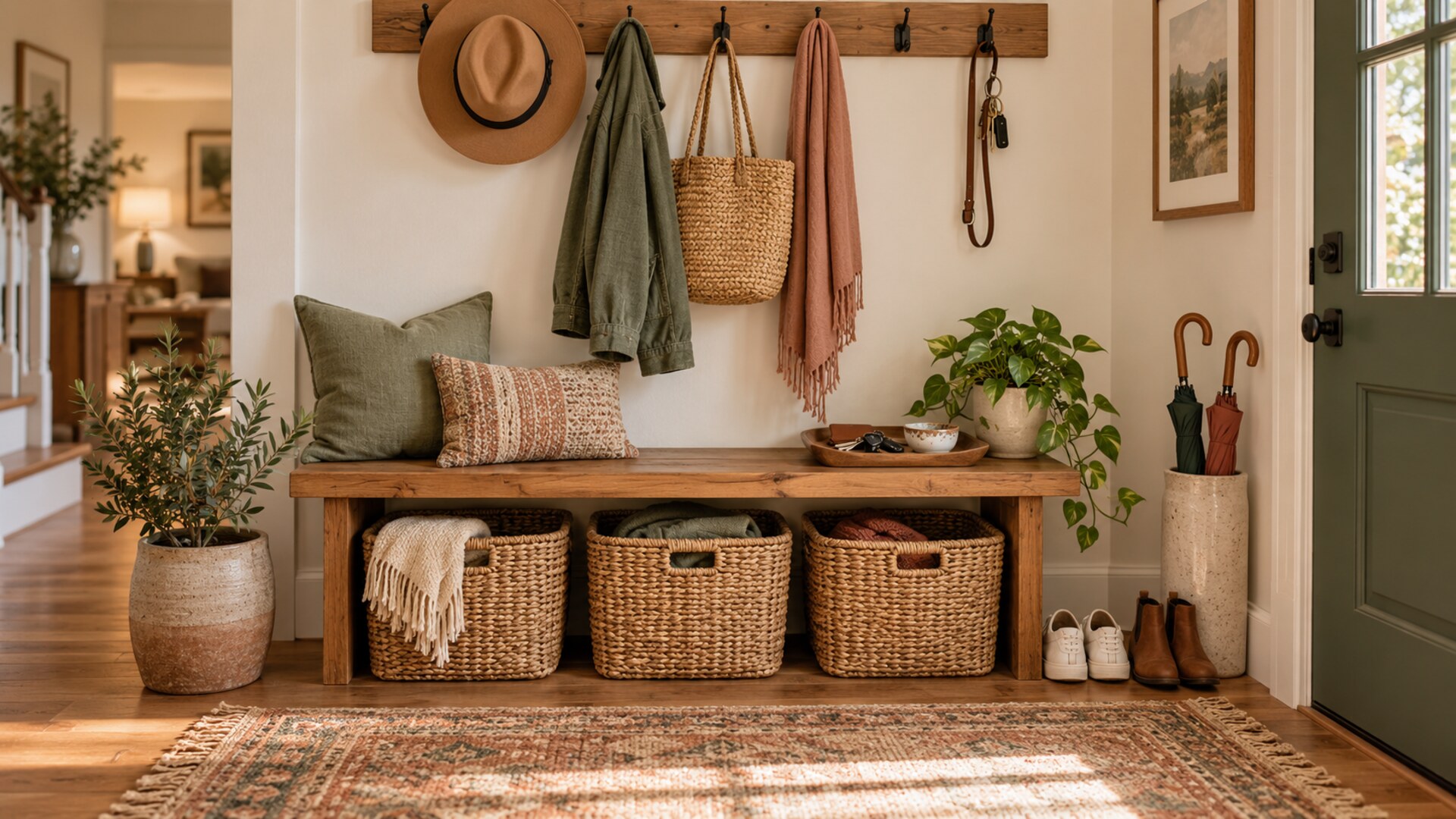
    • Open Bins: They placed three open woven baskets in the entryway for shoes, leashes, and backpacks.
    • Point of Use: They put scissors and tape in three separate rooms where packages and crafts happened.
    • Nightly Reset: Every evening at 8:15 PM, they put on dance music and did a 10-minute family pickup sprint.

    The house stayed consistently tidy with zero Saturday scrubbing marathons, and household tension melted away.

    3 Rules for Lasting Home Order

    1. Design systems for the lowest-energy version of yourself at the end of a hard day.
    2. Keep all flat surfaces clear overnight to prevent morning cognitive overload.
    3. Touch items only once when putting them away.

    The Endless Peace of the Frictionless Home

    When your storage systems are simple and effortless, order becomes your natural baseline. Eliminate friction, savor your clear spaces, and enjoy the calm of a tidy home.

    The Psychology of Visual Calm at Home

    When your physical environment is organized with low-friction systems, your resting cortisol levels drop. Your brain is no longer bombarded by visual demands to tidy, wash, or clean. You create a soothing environment that restores your mental focus and nurtures peace.

    3 Rules for Lasting Domestic Peace

    1. Use open bins and baskets in high-traffic family zones.
    2. Store everyday tools at their physical point of use.
    3. Keep drawers and shelves at 80% capacity to prevent clutter avalanches.

    Savoring the Order of a Peaceful Home

    When your home is a place of order and ease, your soul breathes freely. Eliminate clutter, maintain your simple systems, and enjoy the peace of your space.

    Practical Reflection on Home Order

    Take 10 minutes tonight to clear one flat surface in your home. Experience the immediate lightness and mental clarity of an uncluttered space.

    3 Core Commitments to Domestic Peace

    Summary of the Sustainable Home Order Blueprint

    • Eliminate friction by designing organization systems for your lowest-energy state.
    • Use low-friction open bins and store everyday tools at their physical point of use.
    • Implement the One-Touch Rule and a 10-minute nightly reset to keep surfaces clear.

    The Sacred Calm of the Frictionless Home

    Order creates freedom. Maintain your simple low-friction systems, enjoy your clear spaces, and let your home be a haven of restorative peace.

    Savoring the Calm of the Simple Den

    When your home is free of clutter and friction, your soul finds rest. Maintain your simple systems, enjoy your clear spaces, and live in lasting peace.

    3 Home Organization Truths

    1. Organization systems must be designed for your lowest-energy moments.
    2. Low-friction open bins eliminate 90% of daily domestic clutter.
    3. A 10-minute nightly family reset transforms morning peace and focus.

    Reclaiming Domestic Serenity

    Clear flat surfaces create clear minds. Enjoy your organized sanctuary and thrive in daily peace.

    The Timeless Joy of the Simple Home

    When you let go of complicated systems, tidiness becomes effortless. Enjoy your clean, peaceful sanctuary every single day.

    Savoring the Flow of a Tidy Sanctuary

    When your home operates with effortless order, every day begins in calm. Protect your peaceful space, live with intention, and thrive.

    Summary of the Home Organization Playbook

    Frequently Asked Questions

    Why do most home organization systems fail within weeks?

    Because they require too many high-effort steps (lids, latches, precise folding), creating friction that causes clutter to accumulate.

    What is the ‘One-Touch Rule’?

    The habit of touching an object only once—putting it directly into its permanent home rather than setting it down temporarily on a surface.

    How does open-bin storage keep rooms tidy?

    Open bins allow family members to toss items into designated containers instantly without removing lids or navigating complex sorting.

    What is the ‘Point-of-Use’ storage principle?

    Storing everyday items at the exact physical spot where they are regularly used rather than in centralized storage areas.

    Why should drawers and shelves be kept at 80% capacity?

    Because empty breathing room allows items to be removed and replaced effortlessly without jamming or mess.

    How can I get messy kids or partners to keep things organized?

    Make storage systems effortless (open bins, hooks instead of hangers) and participate in a fun 10-minute nightly cleanup together.

    What is the best way to handle daily paper mail clutter?

    Stand directly over the recycling bin when opening mail, recycling 90% immediately and filing the rest in a single action folder.

    What is the single best rule to implement tonight?

    Clear your primary kitchen counter before bed using the One-Touch Rule.

  • How to Live with Roommates Peacefully: 6 Non-Negotiable Agreements

    How to Live with Roommates Peacefully: 6 Non-Negotiable Agreements

    The Reality of Shared Living

    Sharing an apartment or house with roommates is a financial reality for millions of students and young professionals. It can be a source of wonderful camaraderie, shared cooking, and lifelong friendship. Or it can turn into a living nightmare:

    • A kitchen sink overflowing with crusty pans soaking for four days.
    • A romantic partner who practically moves in without paying rent.
    • Passive-aggressive sticky notes left on the refrigerator: “WOULD BE NICE IF SOMEONE TOOK OUT THE TRASH.”

    Most roommate disputes do not happen because someone is evil. They happen because each person grew up with different unwritten household standards, and nobody established clear, objective rules. Here are the 6 non-negotiable agreements that guarantee a peaceful shared home.

    1. The ‘Clean-As-You-Go’ Kitchen Rule

    The kitchen is the #1 battleground in shared living.

    • The Rule: The kitchen sink must be 100% empty of dirty dishes before going to bed every night.
    • “Soaking” a pan is limited to two hours, not three days.

    2. Clear Quiet Hours (Sunday through Thursday)

    Establish objective quiet hours (e.g., 10:00 PM to 7:00 AM on weeknights):

    • During quiet hours, headphones must be used for gaming and TV, and shared living room phone calls move to private bedrooms.

    3. The Overnight Guest Policy (The 2-Night Rule)

    Nothing causes faster resentment than a roommate’s new partner practically living in the apartment for free.

    • The Rule: Romantic partners and out-of-town guests may stay a maximum of two consecutive nights per week without prior group approval.

    4. The Shared Consumables Fund

    Never argue over who bought the last roll of toilet paper.

    • Set up a shared digital pool (Splitwise or Venmo) where everyone contributes $15 a month for communal toilet paper, dish soap, olive oil, and trash bags.

    5. Objective, Visual Chore Responsibilities

    Vague statements like “Let’s all just keep things tidy” always fail because standards differ.

    • Create an objective, rotating chore chart: Person A cleans bathroom, Person B vacuums common areas, Person C takes out trash. Rotate every Sunday.

    6. The ‘No Sticky Notes’ Communication Agreement

    Agree in advance: Zero passive-aggressive texts or sticky notes.

    • If something bothers you, bring it up kindly face-to-face within 24 hours, or address it at the monthly 15-minute House Sync.

    Real-World Case Study: Transforming a Hostile Shared House

    Three young professionals shared a 3-bedroom apartment in Toronto. Within four months, the sink was constantly overflowing, dishes went unwashed for days, and one roommate’s partner was practically living in the apartment rent-free. The tension was so thick that roommates avoided the kitchen.

    They called a formal 30-minute House Reset Meeting:

    • They instituted the 6 Non-Negotiable Agreements.
    • They signed a physical chart posted on the fridge: Zero Dishes Overnight, 2-Night Guest Limit, and a $15/month shared consumables fund.
    • They scheduled a monthly 15-minute House Sync over takeout tacos.

    The passive-aggressive sticky notes vanished, the apartment stayed clean, and the three roommates lived together in peace for three years.

    3 Rules for Peaceful Roommate Living

    1. Establish written, objective household agreements before moving in together.
    2. Enforce the Zero-Dishes-Overnight rule to protect shared kitchen harmony.
    3. Hold a monthly 15-minute House Sync to resolve minor issues before they fester.

    The Harmony of the Shared Sanctuary

    Shared living can be a source of rich companionship and peace. Establish clear agreements, communicate with direct honesty, and build a home that welcomes everyone with warmth.

    Building a Culture of Direct Communication

    Living with roommates is a masterclass in adult cooperation. When you establish clear, objective agreements from day one, household friction dissolves into easy camaraderie.

    3 Habits for Roommate Harmony

    1. The 24-Hour Rule: If an issue bothers you, bring it up kindly face-to-face within 24 hours.
    2. The Clean Counter Standard: Keep the kitchen sink empty overnight.
    3. The Monthly House Sync: Review bills, chores, and schedules over a friendly meal once a month.

    3 Commitments to Peaceful Shared Living

    1. Establish written, objective household agreements on move-in day.
    2. Respect shared common spaces and keep quiet hours consistent.
    3. Treat roommates with direct honesty, kindness, and mutual respect.

    Savoring the Harmony of the Shared Den

    When a home is built on mutual respect, every room feels like an embrace. Honor your agreements, communicate with love, and enjoy your peaceful home.

    The Living Peace of Mutual Respect

    Clear agreements create lifelong harmony. Treat your roommates with kindness, keep your space clean, and enjoy a home filled with laughter and peace.

    3 Core Commitments to Peaceful Shared Living

    Summary of the Peaceful Roommate Living Blueprint

    • Transform vague assumptions into written agreements for dishes, noise, and guests.
    • Enforce the Zero-Dishes-Overnight rule to protect shared kitchen harmony.
    • Hold a monthly 15-minute House Sync to resolve minor friction before resentment builds.

    The Dignity of Shared Living

    Savoring the Harmony of the Shared Home

    When rooming together is grounded in clear agreements, home becomes a haven of laughter and support. Respect your space, communicate directly, and live in joyful peace.

    3 Truths About Shared Living

    1. Written, objective agreements eliminate 90% of household friction.
    2. The Zero-Dishes-Overnight standard protects kitchen harmony for everyone.
    3. Direct, kind face-to-face communication beats passive-aggressive notes every time.

    The Living Dignity of Shared Living

    When roommates respect each other’s boundaries and agreements, shared living becomes a source of wonderful memories and lifelong friendship.

    The Living Harmony of Shared Respect

    When housemates respect each other’s boundaries, shared living becomes a haven of laughter and support. Communicate directly, keep your space clean, and enjoy your home.

    Summary of the Shared Living Harmony Blueprint

    Frequently Asked Questions

    What is the most common cause of roommate conflict?

    Kitchen cleanliness, unwashed dishes, uncoordinated overnight guests, and unbalanced chore distribution.

    Why are written roommate agreements so effective?

    They transform vague, subjective emotional expectations into clear, objective household standards agreed upon by all parties.

    How should roommates handle romantic partners staying over?

    Establish a clear weekly limit (e.g., maximum 2 nights per week) and require financial contributions if partners stay long-term.

    What is a ‘House Sync’ meeting?

    A brief 15-minute monthly meeting over pizza or tea where roommates review shared expenses, chores, and household repairs in a friendly setting.

    How do you address a messy roommate without creating tension?

    Focus on shared agreements and ‘I’ statements: ‘Our agreement is to keep the sink clear overnight. Let’s make sure we both follow it.’

    How should shared household items like cleaning supplies be paid for?

    Create a shared digital fund where each roommate contributes a fixed monthly amount for toilet paper, trash bags, and detergent.

    What should you do if a roommate repeatedly violates house rules?

    Hold a formal house meeting, review the original signed agreement, and discuss whether the living arrangement is a viable fit.

    What is the single best rule to institute on moving day?

    Agree on the zero-dishes-overnight policy and post an objective chore schedule on the fridge.

  • How to Cultivate a Sanctuary Home: Simple Sensory Upgrades for Calm

    How to Cultivate a Sanctuary Home: Simple Sensory Upgrades for Calm

    The Home as a Nervous System Sanctuary

    Step across the threshold of your front door: Does your living space feel like an exhale of deep relief, or does it feel like a continuation of the chaotic, noisy outside world? Our ancestors built homes as physical shelters against rain, wind, and predators. Today, our greatest threats are not physical tigers; our greatest threats are chronic mental overstimulation, digital noise, and relentless stress.

    Your home must become an intentional Nervous System Sanctuary—a physical space deliberately curated to soothe your five senses, lower your resting heart rate, and restore your soul. You do not need an expensive interior designer or a million-dollar budget. You can transform any house or apartment into an oasis of peace using Five Sensory Design Principles.

    The 5 Sensory Pillars of a Sanctuary Home

    1. Visual Calm: Eliminate the “Big Light”

    • The Problem: Harsh, white overhead ceiling fluorescent lights mimic hospital operating rooms, keeping your cortisol elevated at night.
    • The Sanctuary Upgrade: Never turn on the “big ceiling light” after sundown. Use low-placed, warm amber lamps (2200K to 2700K spectrum) and real beeswax candles. Warm amber pools of light signal safety to the primitive brain.

    2. Auditory Stillness: Acoustic Softening

    • The Problem: Hardwood floors and bare drywall create harsh acoustic echoes that amplify every slammed door and TV blare.
    • The Sanctuary Upgrade: Add thick wool area rugs, heavy linen curtains, and fabric cushions to absorb sound waves, creating a quiet, muffled library atmosphere.

    3. Olfactory Grounding: Nature Scents

    • The Problem: Synthetic aerosol air fresheners contain harsh chemical fragrances that trigger headaches.
    • The Sanctuary Upgrade: Diffuse pure essential oils of cedarwood, bergamot, pine, or lavender. Open opposite windows for 10 minutes every morning to circulate crisp, oxygen-rich fresh air.

    4. Tactile Comfort: Rich Natural Fibers

    • Surround yourself with weighted cotton throws, linen sheets, and solid wood furniture that feel grounding and authentic to the touch.

    5. Gustatory Warmth: The Daily Tea Station

    • Set up a dedicated corner with ceramic mugs, a glass kettle, and jars of loose-leaf chamomile and peppermint tea.

    Real-World Case Study: Transforming a Stressful City Apartment

    A couple lived in a noisy downtown city apartment where traffic noise and harsh overhead lighting kept them in a state of chronic evening irritability. They implemented the 5 Sensory Sanctuary Upgrades for $120:

    • They bought two second-hand warm amber floor lamps (2200K) and banned the overhead fluorescent ceiling light.
    • They added heavy floor-to-ceiling thermal curtains and a thick wool rug to absorb city street echoes.
    • They placed a diffuser with cedarwood and lavender oil near the front entryway.

    Their apartment transformed into a cozy, soothing sanctuary that lowered their stress the moment they stepped through the door.

    3 Sensory Rules for Home Peace

    1. Use low-placed warm amber lighting and ban harsh white overhead bulbs at night.
    2. Soften acoustic echo with heavy rugs, curtains, and fabric textures.
    3. Diffuse natural essential oils and open windows daily for crisp, oxygen-rich air.

    The Healing Power of the Sensory Sanctuary

    Your home is the physical container of your life. Infuse it with warm light, soft textures, and natural scents, and let every room be a soothing embrace for your soul.

    The Evolutionary Power of the Safe Den

    For hundreds of thousands of years, human survival depended on returning to a safe, quiet den at the end of a dangerous hunt. When our modern living spaces are flooded with chaotic noise, harsh fluorescent lighting, and clutter, our primitive biology never receives the signal that the hunt is over. By curating warm amber light, soothing acoustic textiles, and natural earthy scents, you tell your ancient biology: > “The hunt is over.

    You are home. You are safe. You can finally rest.”

    The Sacred Beauty of the Home Sanctuary

    Your home is the sacred container of your daily life. Infuse it with warmth, soft textures, and gentle light, and let it be a haven of deep, restorative peace.

    Practical Reflection on Home Sanctuary Design

    Turn off the overhead ceiling light and switch on a warm bedside lamp tonight. Notice how immediately your body softens into peace.

    Practical Reflection on Sensory Sanctuary Design

    Look at your living space tonight through the lens of your five senses. Switch on a warm amber lamp, soften acoustic echoes, and let your home hold you in peace.

    3 Core Commitments to Sensory Harmony

    Summary of the Sanctuary Home Blueprint

    • Design your living space for all five senses to signal safety to your primitive biology.
    • Eliminate harsh white overhead lighting in favor of warm amber floor lamps.
    • Soften acoustic echoes with rugs, diffuse earthy scents, and open windows daily.

    Frequently Asked Questions

    What makes a home feel like a ‘sanctuary’?

    A home designed to minimize sensory stress through warm amber lighting, sound-dampening textiles, natural scents, and organized, clutter-free surfaces.

    Why is overhead white lighting so stressful at night?

    Because white and blue-spectrum overhead light suppresses melatonin production and tricks the circadian clock into maintaining alertness.

    What is the best lightbulb temperature for cozy living rooms?

    Warm amber bulbs between 2200K and 2700K (Kelvin) provide soothing, soft illumination.

    How can you make a noisy apartment quieter on a budget?

    Hang heavy thermal curtains, place thick rugs with felt pads on floors, and place fabric tapestries or bookshelves along shared walls.

    What scents are proven to reduce anxiety in the home?

    Lavender, cedarwood, bergamot, chamomile, and sweet orange essential oils have clinically demonstrated calming effects on the autonomic nervous system.

    What is the concept of ‘Hygge’ in home design?

    The Danish cultural concept of coziness, warmth, and comfortable contentment shared with loved ones around soft lighting and simple pleasures.

    How does indoor air quality affect mental mood?

    Poor ventilation and high CO2 levels cause sluggishness and headaches; opening windows daily boosts cognitive oxygenation.

    What is the fastest 5-minute upgrade to make your room feel peaceful tonight?

    Turn off the main overhead light, switch on two small bedside lamps, and light a candle.

  • How to Declutter Your Living Space for Immediate Mental Clarity

    How to Declutter Your Living Space for Immediate Mental Clarity

    How to Declutter Your Living Space for Immediate Mental Clarity

    The Hidden Psychological Tax of Physical Mess

    Walk into your living room right now and look around: Piles of unopened mail on the entryway table, random cords dangling from shelves, clothes draped over chairs, and kitchen counters covered in appliances you haven’t used in six months. You might tell yourself: “It doesn’t bother me; I’m just busy.” Neuroscience proves otherwise. In a landmark study by UCLA’s Center on Everyday Lives of Families, researchers tracked working parents and discovered that high levels of physical clutter in the home directly spiked cortisol (stress hormone) levels, particularly in women.

    Your brain does not see static piles of stuff. Your brain sees uncompleted tasks. Every single item in your visual field sends a silent, nagging signal: “Wash me, file me, fix me, put me away.” When your home is cluttered, your prefrontal cortex is constantly bombarded by visual noise, leaving you mentally drained before your day even begins.

    The 3 Psychological Traps of Clutter

    1. The Sunk Cost Fallacy

    You keep a $150 jacket you hate wearing because you feel guilty about the money you spent. The Truth: The money was gone the second you swiped your card. Keeping an item that makes you feel guilty only charges you a daily emotional tax.

    2. The ‘Fantasy Self’

    You hold onto yoga mats you never use, bread machines in unopened boxes, and textbooks on ancient Greek because they represent who you wish you were. Let go of the fantasy self so you can love and honor the real person you are today.

    3. Sentimental Guilt

    You keep your great-aunt’s dusty china set out of fear that giving it away dishonors her memory. The Truth: Memories reside in your heart, not in ceramic plates.

    4 Practical Decluttering Rules

    1. The Surface-First Rule

    Never start by dumping out a chaotic closet. Start by clearing flat surfaces: kitchen islands, coffee tables, and desks. Flat surfaces instantly calm the eyes.

    2. The 20/20 Rule (The Minimalists)

    If an item costs less than $20 and can be replaced in less than 20 minutes from a local store, let it go immediately. Stop hoarding backup rubber bands and sauce packets.

    3. The ‘Quarantine Box’ Method

    If you are terrified of regretting a decision, put questionable items in a cardboard box, seal it with tape, and write a date six months in the future. If you don’t open the box in six months, donate it without looking inside.

    4. One-In, Two-Out

    Whenever you bring one new item into your home, donate or recycle two old items.

    Real-World Case Study: The 1-Room Weekend Reset

    A freelance software developer found himself constantly distracted, anxious, and irritable while working in his home office, which was cluttered with old tech boxes, unfiled receipts, and unused monitors. He ran a dedicated 2-hour decluttering experiment:

    • The Surface Clear: He stripped his desk completely bare, wiping down the wood with lemon oil.
    • The 20/20 Rule: He threw away a box of 40 outdated cables and duplicate USB adapters.
    • The Quarantine Box: He packed three questionable mechanical keyboards into a box dated six months in the future.

    Within 48 hours, his coding speed doubled, his afternoon headaches vanished, and his home office became his favorite room in the house.

    3 Daily Habits to Keep Clutter Away

    1. Clear your primary work desk and kitchen counters every evening before bed.
    2. Adopt the ‘Don’t Put It Down, Put It Away’ physical discipline.
    3. Conduct a seasonal ‘Quarantine Box’ audit to release items you have outgrown.

    The Eternal Sanctuary of a Clear Home

    When you unclutter your physical living space, your mind breathes freely. Protect your home as a peaceful sanctuary, and let simplicity illuminate your daily life.

    The Neuroscience of Visual Friction and Working Memory

    Your brain’s visual cortex processes every object in your peripheral vision, even when you aren’t looking at it directly. Psychologists call this Visual Friction:

    • When a room is crowded with clutter, your brain is forced to expend continuous background energy filtering out irrelevant stimuli.
    • This background filtering depletes working memory, elevates resting cortisol, and lowers your emotional patience.

    The Power of the Clear Flat Surface

    • Clearing flat kitchen counters, dining tables, and desks creates immediate neurological relief.
    • Flat surfaces act as visual resting zones, signaling to your amygdala that your physical environment is safe, orderly, and under control.

    3 Daily Habits for Lasting Mental Clarity

    1. Clear your kitchen counters and primary work desk every evening before bed.
    2. Adopt the ‘Don’t Put It Down, Put It Away’ physical discipline.
    3. Conduct a seasonal ‘Quarantine Box’ audit to release items you have outgrown.

    The Freedom of Intentional Living

    When you release the clutter you no longer need, your living space transforms into a sanctuary of peace. Embrace simplicity and experience the profound lightness of a decluttered home.

    Practical Reflection on Visual Space and Clarity

    Take 10 minutes today to clear your primary desk or kitchen island. Notice how immediately your breathing deepens and your mind feels clear when visual noise is removed.

    3 Core Commitments to a Clear Home

    1. Keep flat surfaces clear to provide visual resting zones for your eyes.
    2. Apply the 20/20 rule to discard low-cost duplicate clutter without fear.
    3. Treat your home as a peaceful sanctuary for your nervous system.

    Summary of the Decluttering for Clarity Blueprint

    • Recognize that visual clutter continuously elevates resting cortisol levels.
    • Clear flat surfaces first to give your prefrontal cortex visual resting zones.
    • Apply the 20/20 rule and Quarantine Box to release unwanted items without guilt.

    Frequently Asked Questions

    Why does household clutter cause anxiety?

    Because visual clutter overloads the brain’s sensory cortex with competing stimuli, elevating cortisol and reducing focus.

    What is the ‘Fantasy Self’ in decluttering?

    Holding onto possessions that represent an idealized identity (e.g., musical instruments or workout gear) rather than your actual lifestyle.

    What is the 20/20 decluttering rule?

    If an item costs less than $20 and can be purchased in less than 20 minutes, you can safely discard or donate it without fear.

    How does the ‘Quarantine Box’ method work?

    Pack questionable items into a sealed box dated 6 months ahead; if untouched after 6 months, donate the box unopened.

    Where should you start decluttering when overwhelmed?

    Start with one small, high-visibility surface, such as the kitchen counter or bedside table, to build immediate visual momentum.

    How can I declutter sentimental family items without guilt?

    Take a high-resolution photo of the item to preserve the memory, keep one signature piece, and donate the rest to someone who will use it.

    How does decluttering improve sleep quality?

    Removing visual mess and electronics from the bedroom lowers cognitive stimulation, allowing the brain to produce melatonin naturally.

    What is the best 10-minute decluttering exercise to do today?

    Grab a laundry basket, walk through your living room, and collect 10 items to donate and 10 pieces of trash to throw away.