Author: truwebzstudiosinc@gmail.com

  • How to Maintain Independence in a Long-Term Committed Relationship

    How to Maintain Independence in a Long-Term Committed Relationship

    The ‘Relationship Blob’ Trap

    Think about what happens to many couples after three years of living together: They share every meal. They watch the same television shows. They hang out with the same mutual friends.

    When asked what they enjoy doing on weekends, they reply: “WE like hiking, WE like Italian food, WE are thinking about taking a pottery class.” In relationship therapy, this is called Enmeshment or the “Relationship Blob”: two distinct, vibrant individuals merge into a single, codependent organism. While closeness feels safe in the beginning, complete enmeshment suffocates romance. Renowned relationship therapist Esther Perel revealed a profound paradox: > “Love seeks closeness, but desire requires space.

    Eroticism thrives in the mystery between two distinct, sovereign individuals.” When you have zero separate experiences, zero independent passions, and zero solo friendships, you have nothing new or fascinating to bring back to the dinner table. Maintaining your Independence does not mean you love your partner less; it is the very oxygen that keeps your love alive.

    4 Practices for Healthy Romantic Autonomy

    1. Maintain Independent Hobbies

    You do not need to do everything together:

    • If you love rock climbing, go climbing with your gym friends while your partner paints at home.
    • Having separate passions makes reunions exciting and joyful.

    2. Cultivate Solo Friendships

    Protect individual friendships where you catch up one-on-one without your spouse present.

    3. Take Solo Retreats and Weekends

    Spend one weekend a year taking a solo camping trip, attending a workshop, or visiting an old college roommate alone.

    4. Hold Your Own Opinions

    You do not need to agree on every book, movie, or philosophy. Loving disagreement celebrates your partner’s unique mind.

    Real-World Case Study: The Solo Saturday That Reignited Romantic Passion

    A married couple of eight years felt like boring roommates. They did everything together, had no separate hobbies, and their sexual intimacy had evaporated. They implemented the Romantic Autonomy Protocol:

    • Solo Saturdays: Every Saturday morning, the husband went mountain biking with his trail group, while the wife attended a watercolor studio workshop alone.
    • Separate Friendships: Each partner spent one evening a month catching up with personal friends without the other.

    When they reunited on Saturday evenings, they were energized, had fresh stories to share, and their romantic desire and mutual attraction surged.

    3 Rules for Independence in Love

    1. Recognize that passion requires the healthy space and mystery between two whole individuals.
    2. Protect your independent creative hobbies, solo friendships, and personal goals.
    3. Celebrate your partner’s separate world rather than viewing autonomy as a threat.

    The Radiant Oxygen of Independence

    True love does not cage; true love gives wings. Cultivate your unique passions, honor your independence, and build a partnership that stands strong through every season.

    The Erotic Power of Space in Romance

    When two partners maintain their separate creative worlds and friendships, coming home feels exciting and fresh. Independence prevents codependency and fuels the deep admiration that sustains lifelong romance.

    3 Rules for Maintaining Your Identity

    1. Protect dedicated solo hobbies and creative outlets.
    2. Spend regular time catching up with personal friends independently.
    3. Celebrate your partner’s unique world with curiosity and trust.

    Savoring the Boundless Joy of True Partnership

    Love flourishes in freedom and trust. Celebrate your independence, honor your connection, and build an unbreakable life together.

    The Enduring Strength of Sovereign Love

    When two whole individuals choose each other in freedom, partnership becomes an unshakeable fortress of romance, trust, and joy.

    Practical Reflection on Romantic Independence

    Take time for your own creative passion or solo friendship this week. Reclaim your unique identity and bring fresh energy back to your partnership.

    3 Core Commitments to Romantic Autonomy

    Summary of the Romantic Autonomy Blueprint

    • Prevent enmeshment by maintaining independent creative hobbies and solo friendships.
    • Understand that romantic desire and eroticism require healthy psychological space.
    • Separate your self-worth and emotional weather from your partner’s daily mood.

    The Radiant Strength of Sovereign Romance

    True love gives freedom to grow. Honor your independence, nurture your unique passions, and build a partnership that stands strong across decades.

    3 Romantic Autonomy Truths

    1. Healthy space and mystery are essential to sustain lifelong desire.
    2. Separate passions and solo friendships bring vitality to the marriage.
    3. True partnership is the union of two whole, autonomous individuals.

    Reclaiming Identity in Love

    Love yourself enough to be whole. Bring your authentic passions to the table and flourish.

    The Endless Magic of Independent Romance

    When you maintain your unique identity, passion stays vibrant and fresh. Love freely, grow together, and thrive.

    Summary of the Romantic Autonomy Playbook

    • Maintain independent creative hobbies and solo friendships to fuel desire.
    • Understand that romantic desire requires psychological space and mystery.
    • Separate your self-worth from your partner’s daily emotional weather.

    The Sacred Rhythm of Autonomous Romance

    When two whole individuals love in freedom, romance becomes an unshakeable fortress. Nurture your passions, honor your independence, and thrive together.

    Summary of the Romantic Independence Playbook

    Frequently Asked Questions

    Why is independence important in a marriage?

    Because maintaining individuality prevents codependency, fuels romantic passion, and brings fresh energy into the partnership.

    What does Esther Perel mean by ‘desire requires space’?

    Sexual and emotional desire thrives on mystery and seeing your partner as a distinct, autonomous person rather than an extension of yourself.

    What is ‘Enmeshment’ in romantic relationships?

    An unhealthy dynamic where personal boundaries are blurred, individual identities are lost, and partners absorb each other’s emotions.

    Is it healthy for married couples to vacation separately?

    Yes. Occasional solo trips or trips with friends foster healthy autonomy and make coming home feel joyful.

    How can I reclaim my identity after years of people-pleasing in a relationship?

    Pick up one old hobby you loved before meeting your partner, and schedule a dedicated weekly time slot for it.

    Does wanting alone time mean I am falling out of love?

    No. Needing solitude is a universal biological requirement for emotional processing and self-regulation.

    How do you set independence boundaries without hurting your partner?

    Reassure them of your love first: ‘I love our time together, and I also need Saturday mornings for my painting studio.’

    What is the single best action to practice this week?

    Plan one solo evening activity or coffee date with a personal friend without your partner.

  • Creating a Low-Waste Lifestyle Without Extreme Perfectionism

    Creating a Low-Waste Lifestyle Without Extreme Perfectionism

    The Instagram Mason Jar Myth

    Have you ever seen those zero-waste influencers online holding up a tiny 8-ounce glass mason jar and smiling: > “This is all the trash my family created over the last four years!” You look at your own kitchen trash can—filled with grocery plastic wraps, cereal boxes, and takeout containers—and you feel like an eco-villain. So you try extreme zero-waste living: you try making your own homemade toothpaste from baking soda, spend $300 on fancy stainless steel containers, and refuse to buy groceries unless they come in bulk glass jars.

    Within three weeks, you are completely burned out, frustrated, and drowning in dirty dishes. Zero-waste pioneer Anne-Marie Bonneau stated the ultimate truth of environmental stewardship: > “We don’t need a handful of people doing zero waste perfectly. We need millions of people doing it imperfectly.” Living a Low-Waste Lifestyle is not about moral purity.

    It is about making simple, durable, common-sense swaps that reduce landfill waste while fitting into your real, busy life.

    5 Practical, High-Impact Swaps

    1. Ditch Paper Towels for Cotton Rags

    • Buy a 24-pack of cheap 100% cotton bar mops or cut up old t-shirts.
    • Keep a stack in a kitchen drawer and a small bin under the sink for dirty rags. You will save $150 a year and eliminate massive tree waste.

    2. The Reusable Water Bottle & Coffee Tumbler

    • Keep a stainless steel insulated water bottle and coffee mug in your backpack or car. This eliminates hundreds of single-use plastic bottles and lined paper coffee cups annually.

    3. Tackle Food Waste (The #1 Household Carbon Offense)

    • The most impactful environmental action you can take is eating the food in your fridge before it rots.
    • Create an “Eat Me First” bin on your top refrigerator shelf for vegetables and leftovers.

    4. Switch to Solid Bar Soap and Shampoo

    • Replace liquid body wash in plastic pump bottles with wrapped bar soap. It lasts longer, costs less, and eliminates plastic jugs.

    5. The ‘Secondhand First’ Mindset

    • Before buying new furniture, tools, books, or clothing, check Facebook Marketplace, local thrift shops, or library tool exchanges.

    Real-World Case Study: The 80/20 Low-Waste Kitchen Reset

    A working mother felt overwhelmed trying to live an extreme zero-waste lifestyle, spending hours making homemade laundry detergent and driving to five specialty bulk stores. She shifted to the Imperfect Low-Waste Framework:

    • The Rag Drawer: She cut up 20 old cotton t-shirts and stopped buying paper towels.
    • The ‘Eat First’ Shelf: She created a clear bin in her fridge for vegetables and leftovers, cutting food waste by 80%.
    • Bar Soaps: She replaced plastic body wash and hand soap bottles with bulk paper-wrapped bar soap.

    She reduced her household trash by two bags a week, saved $120 a month, and eliminated eco-anxiety forever.

    3 Rules for Low-Waste Living

    1. Aim for millions of people living low-waste imperfectly rather than zero-waste perfection.
    2. Focus on eliminating food waste, which represents the largest household carbon footprint.
    3. Make durable, reusable swaps that save money and reduce daily friction.

    The Joy of Imperfect Stewardship

    Living lightly on the earth is a daily journey of small, loving choices. Embrace simple swaps, let go of perfectionism, and celebrate the beauty of conscious living.

    The True Power of Imperfect Environmentalism

    Do not let the quest for zero-waste perfection prevent you from making real progress. Every cloth rag you use, every meal you eat before it spoils, and every reusable tumbler you carry makes a tangible difference.

    3 Rules for Low-Waste Stewardship

    1. Focus on eliminating household food waste.
    2. Switch from paper towels to washable cotton kitchen rags.
    3. Buy durable goods secondhand before purchasing new items.

    Savoring the Joy of Mindful Living

    Small conscious choices heal our world. Embrace simple swaps, let go of perfection, and live with gentle reverence for the earth.

    The Living Peace of Conscious Habits

    Every small green habit adds up. Protect our earth with joy, live with intention, and celebrate the beauty of conscious choices.

    Practical Reflection on Low-Waste Living

    Choose one simple sustainable swap to make in your home this week. Embrace imperfect environmentalism and celebrate the beauty of living lightly.

    3 Core Commitments to Sustainable Living

    Summary of the Imperfect Low-Waste Blueprint

    • Reject extreme zero-waste perfectionism in favor of practical, sustainable habits.
    • Prioritize eating the food in your fridge to eliminate damaging household food waste.
    • Make high-impact swaps: washable cotton rags, bar soaps, and buying secondhand first.

    The Joy of Conscious Stewardship

    Small green choices make a lasting impact. Embrace simple low-waste swaps, let go of perfection, and live with gentle reverence for the earth.

    Savoring the Joy of Imperfect Stewardship

    3 Low-Waste Living Truths

    1. Imperfect environmentalism by millions is better than perfection by a few.
    2. Eliminating household food waste is the highest-impact eco habit.
    3. Reusable cloth rags and secondhand goods save money and resources.

    Reclaiming Harmony with the Earth

    Small green habits make a big difference. Live with care, intention, and gratitude.

    The Beauty of Conscious Choices

    Every small choice to reduce waste honors the earth. Walk lightly, live simply, and celebrate the gift of nature.

    The Endless Beauty of Sustainable Living

    Living with care for the earth is a daily spiritual practice. Embrace simple swaps, celebrate imperfect stewardship, and walk in gratitude.

    Summary of the Sustainable Low-Waste Playbook

    Frequently Asked Questions

    What is the difference between zero waste and low waste?

    Zero waste aims for total landfill elimination (often impractical for everyday families); low waste focuses on practical, substantial reductions in household waste.

    What is the single biggest source of household environmental impact?

    Food waste rotting in landfills, which produces massive quantities of methane gas.

    How can I start living low waste on a tight budget?

    Start by using what you already have, buying less stuff, eating all your groceries, and switching from paper towels to reusable rags.

    Are plastic recycling programs effective?

    Only roughly 9% of plastics are actually recycled globally; reducing consumption and using reusables is far more effective than recycling.

    How can families reduce plastic waste with young children?

    Use cloth napkins, buy snacks in bulk, use stainless steel lunchboxes, and buy secondhand children’s toys and clothing.

    What are solid bar shampoo and soaps?

    Concentrated cleansing bars made without water that require no plastic packaging, lasting 2-3x longer than bottled liquid soaps.

    How does buying secondhand help the planet?

    It keeps functional goods out of landfills and avoids the resource-heavy manufacturing and shipping footprint of new items.

    What is the easiest low-waste swap to start today?

    Put reusable cloth rags in your kitchen and stop buying disposable paper towels.

  • How to Set Boundaries with Demanding In-Laws Respectfully

    How to Set Boundaries with Demanding In-Laws Respectfully

    The Intrusion of the Unannounced Doorbell

    It is a Saturday morning. You are in your pajamas, drinking coffee, and enjoying a quiet morning with your spouse and children. Suddenly, the front door swings open or the doorbell rings aggressively: Your mother-in-law walks into your kitchen unannounced with bags of groceries, inspecting your counter clutter, rearranging your pantry, and criticizing your toddler’s breakfast.

    You glance at your spouse, hoping for support. Instead, your spouse looks at the floor, smiles nervously, and says nothing. In-law boundary friction is one of the primary drivers of early marital discord.

    When parents refuse to recognize that their adult child has formed a new, sovereign family unit, boundaries get trampled, privacy evaporates, and resentment poisons the marriage. Setting kind, firm boundaries with in-laws is not about being hostile or ungrateful; it is the necessary foundation for a peaceful, healthy extended family.

    The Golden Rule: The United Front

    In marital psychology, there is an absolute non-negotiable rule for handling in-laws: > You handle YOUR biological parents; your spouse handles THEIRS. When a boundary comes from the in-law child (“Sarah says you can’t come over”), the parents view Sarah as the controlling, evil outsider who stole their baby. When the boundary comes directly from their own biological child (“Mom, we love you, but Sarah and I have decided that we need 24 hours’ notice before visits”), it reinforces the strength of the marriage.

    4 Essential In-Law Boundaries

    1. The ‘No Unannounced Drop-Ins’ Rule

    Establish a clear household standard:

    • Visits must be coordinated at least 24 to 48 hours in advance.
    • If they drop by unannounced, greet them warmly at the door on the porch: “It is so good to see you! We are in the middle of family chore time right now, but let’s plan dinner for next Tuesday!”

    2. Sovereign Parenting Rules

    Grandparents must respect parents’ rules regarding bedtime, screen time, and discipline.

    3. Holiday Rotation Independence

    You do not owe both families equal time on every single holiday. Alternate years or establish your own nuclear family holiday morning traditions.

    4. Financial Privacy

    Never discuss salaries, mortgages, or private couples’ expenses with in-laws.

    Real-World Case Study: The United Front That Saved a Marriage

    A young couple faced severe marital strain because the husband’s mother repeatedly dropped by unannounced, rearranged their baby’s nursery, and criticized the wife’s cooking. The husband avoided conflict, leaving his wife feeling abandoned and furious. They implemented the United Front In-Law Protocol:

    • The husband took his mother out for lunch privately.
    • He said with warm, unshakeable firmness: “Mom, we love having you in our lives, but our family routine requires privacy. Moving forward, we need 24 hours’ notice before visits, and we are not accepting unannounced drop-ins.”
    • When the mother dropped by unannounced two days later, the husband answered the door on the porch, gave a warm hug, and held the boundary: “It’s great to see you, Mom! We are doing family bath time right now, but let’s plan dinner for Sunday.”

    The mother adapted, the wife felt deeply protected and cherished, and family visits became peaceful and joyful.

    3 Rules for In-Law Boundaries

    1. The biological child must always deliver boundaries directly to their own parents.
    2. Present a 100% unified front without blaming your spouse for household rules.
    3. Deliver boundaries with warmth, gratitude, and clear alternative dates.

    The Unshakeable Fortress of the United Front

    When a marriage is built on clear boundaries and mutual loyalty, extended family relationships flourish. Stand together in love, lead with warmth, and protect your home.

    The Architecture of Extended Family Peace

    Healthy boundaries do not divide families; they protect them. When spouses maintain a unified front and communicate limits with warmth, in-law relationships transform from stressful battlegrounds into peaceful partnerships.

    3 Rules for In-Law Harmony

    1. Deliver boundaries directly to your own biological parents.
    2. Never blame your spouse when communicating household rules.
    3. State limits with love, gratitude, and alternative scheduled dates.

    Savoring the Harmony of the United Front

    When you stand together in love, your home is an unshakeable haven. Lead with warmth, honor your boundaries, and live in lasting peace.

    Practical Reflection on In-Law Harmony

    Remember that healthy boundaries create long-term family peace. Present a unified front with your spouse, communicate limits with warmth, and protect your home.

    3 Core Commitments to In-Law Peace

    Summary of the In-Law Boundary Blueprint

    • Enforce the United Front rule: spouses always communicate boundaries to their own parents.
    • Establish clear household standards for unannounced visits, parenting, and holidays.
    • Deliver limits with genuine warmth, appreciation, and alternative scheduled plans.

    The Unshakeable Peace of the Sovereign Home

    When spouses stand together in love, extended family dynamics flourish. Lead with warmth, protect your boundaries, and enjoy a peaceful home.

    Savoring the Harmony of the Sovereign Home

    3 In-Law Boundary Truths

    1. Spouses must always communicate household rules to their own parents.
    2. Presenting a unified front eliminates division and protects the marriage.
    3. Kind, consistent boundaries foster healthy, respectful family bonds.

    Reclaiming Peace in the Family Den

    Clear limits create lasting respect. Protect your home with grace and live in joy.

    The Sacred Sanctuary of the Nuclear Family

    Your marriage is a precious garden that requires loving protection. Stand together, lead with warmth, and prosper in peace.

    The Sacred Fortress of Loving Limits

    When you protect your marriage with clear boundaries, family bonds grow deeper and more respectful. Stand together in love and prosper.

    Summary of the In-Law Harmony Playbook

    Frequently Asked Questions

    Why are in-law relationships so prone to conflict?

    Because marriage requires shifting primary emotional loyalty from one’s parents to one’s spouse, which can trigger grief, control issues, or jealousy in parents.

    What is the ‘United Front’ in marriage?

    The commitment that spouses present a single, aligned team to external family, never blaming the other partner when delivering boundaries.

    How should a husband or wife handle an intrusive mother-in-law?

    The biological child must speak with their mother privately, with warmth and firmness: ‘Mom, I love you, but our family needs privacy.’

    What should you do if in-laws drop by unannounced?

    Do not let them in; greet them warmly on the porch and explain that you have private family commitments, scheduling a future date instead.

    How do you handle grandparents who undermine your parenting rules?

    State clearly: ‘We love how much you adore the kids, but for their safety and routine, our household rules must be followed.’

    Is it okay to spend holidays at home instead of traveling to in-laws?

    Yes. Nuclear families have every right to establish their own peaceful holiday traditions in their own home.

    What should you do if your spouse refuses to set boundaries with their parents?

    Attend couples therapy to explore attachment patterns and establish marital alignment before addressing parents.

    What is the single best script for setting visit boundaries?

    ‘We love seeing you, and we want to make sure we give you our full attention, so let’s always plan visits 2 days ahead!’

  • The Art of Showing Up: Small Gestures That Mean the Most in Tough Times

    The Art of Showing Up: Small Gestures That Mean the Most in Tough Times

    The Paralysis of the Awkward Friend

    A close friend suffers a devastating loss: a parent passes away, a pregnancy ends in miscarriage, or they receive a scary medical diagnosis. You want to help. You love them with all your heart.

    Yet you freeze in terror:

    • “What if I say the wrong thing and make them cry?”
    • “Should I call, or will I be bothering them?”
    • “I don’t know what to do, so I’ll just wait until things calm down.”

    Out of fear of awkwardness, we send a generic text: > “I am so sorry for your loss! Let me know if you need anything at all!” While well-intentioned, “Let me know if you need anything” places a heavy cognitive burden on a person in crisis. They are in shock, exhausted, and barely able to shower.

    They will never call you to ask for paper towels or dinner. The Art of Showing Up is the practice of moving from vague offers to specific, low-friction, concrete acts of practical love.

    3 Toxic Platitudes to Never Say

    1. “Everything happens for a reason.” (Invalidates their grief and feels cruel).
    2. “At least they lived a long life / At least you can have another baby.” (Minimizes profound human loss).
    3. “I know EXACTLY how you feel.” (Hijacks their grief and centers your own story).

    5 Practical Micro-Gestures That Bring Real Comfort

    1. Concrete Food Drop-Offs (No Coordination Needed)

    Do not ask “What do you want to eat?”

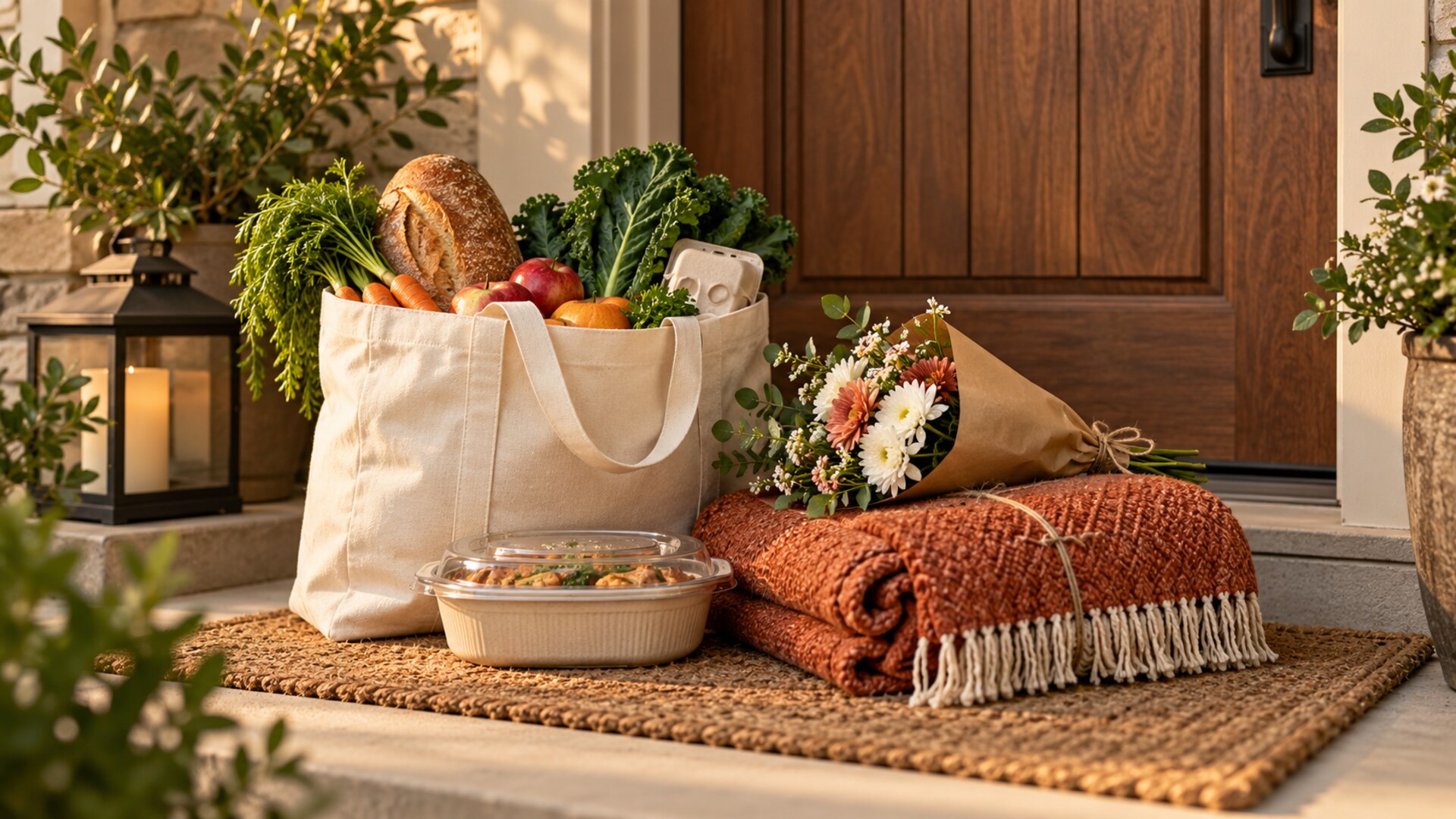
    • Text: “I am dropping off a casserole, fresh bread, and fruit on your front porch at 5:30 PM in a disposable dish. No need to answer the door—just sending love!”

    2. Take Over an Invisible Administrative Chore

    • Mow their lawn.
    • Walk their dog.
    • Drop off a bulk box of toilet paper, paper towels, and bottled water.

    3. The ‘No-Need-To-Reply’ Text

    Send a weekly text: “Thinking of you today. No need to reply—just wanted you to know you are deeply loved.”

    4. Show Up on the 90-Day Mark

    In the first week, a grieving person is flooded with flowers and visitors. By month three, everyone else has moved on, but their acute loneliness hits peak intensity.

    • Put a reminder on your calendar to send a card or coffee invite 90 days after the tragedy.

    5. Sit in Companionable Silence

    You don’t need magic words. Sit on the couch, hold their hand, make tea, and let them cry without trying to cheer them up.

    Real-World Case Study: The Porch Casserole That Healed a Grieving Family

    When a father of three unexpectedly passed away, his wife was inundated with over 200 messages saying: “Let me know if you need anything!” She was too paralyzed with shock to reply to a single one. One thoughtful neighbor practiced the Art of Showing Up:

    • She did not text asking what to cook.
    • Every Tuesday at 5:00 PM for six weeks, she left a warm dinner, a loaf of bread, and a gallon of milk on the porch in a disposable tin with a note: “Dinner is served. No need to answer the door or reply!”
    • On Saturday mornings, she quietly mowed their front lawn while the family rested.

    Years later, the widow recalled that neighbor’s quiet, concrete actions as the anchor that kept her family afloat during the darkest storm of her life.

    3 Rules for Showing Up in Crisis

    1. Move from vague offers to specific, concrete, low-burden practical actions.
    2. Always deliver food and supplies in disposable containers that require zero return.
    3. Remember to check in on the 90-day mark when other support has faded.

    The Timeless Medicine of True Presence

    Showing up for a hurting friend is the purest expression of love. Move past awkwardness, offer practical help, and let your presence be a soothing balm in the storm.

    The Sacred Duty of the Long-Haul Friend

    True friendship is tested in the valleys of grief and loss. When you continue to show up weeks and months after a tragedy with practical support, you become a lifelong anchor of comfort.

    3 Rules for Showing Up Long-Term

    1. Deliver specific, low-burden meals in disposable containers.
    2. Take care of practical chores like lawn mowing and pet care.
    3. Check in on the 90-day anniversary when other support has faded.

    Savoring the Medicine of True Companionship

    To stand by a hurting friend is a sacred honor. Show up with quiet love, offer practical help, and be a steady light in the dark.

    Practical Reflection on Showing Up

    Think of a friend who is walking through a valley of grief or stress today. Send a simple food gift or a loving text with zero expectations.

    3 Core Commitments to Showing Up

    1. Move from vague offers to specific, concrete, low-burden practical actions.
    2. Always deliver food and supplies in disposable containers that require zero return.
    3. Remember to check in on the 90-day anniversary when other support has faded.

    Summary of the Art of Showing Up Blueprint

    • Replace vague offers with specific, low-burden practical actions (food drops, chores).
    • Avoid toxic platitudes and silver linings; offer quiet, companionable presence.
    • Support grieving loved ones over the long haul, especially at the 3-month mark.

    The Endless Beauty of True Friendship

    Showing up for a friend in need is a sacred act of love. Offer practical help, sit in loving silence, and be an unshakeable anchor in tough times.

    Savoring the Sacred Gift of Compassion

    To stand by a hurting friend is a sacred honor. Show up with quiet love, offer practical help, and be an unshakeable light in the storm.

    3 Showing Up Truths

    1. Specific concrete drop-offs relieve the cognitive burden on grieving friends.
    2. True presence does not require profound speeches or solving their pain.
    3. Long-term support at the 3-month mark provides enduring emotional comfort.

    Reclaiming the Power of Friendship

    True love shows up in the quiet moments. Be there with an open heart and steady presence.

    The Timeless Magic of True Presence

    To be there for a grieving friend is the highest form of love. Show up with quiet strength, offer practical help, and be an anchor of peace.

    Summary of the Showing Up Playbook

    Frequently Asked Questions

    Why is ‘let me know if you need anything’ unhelpful to someone in crisis?

    Because people in grief lack the emotional and executive energy to identify needs, delegate tasks, and overcome the shame of asking for help.

    What is the single best thing to say to someone who is grieving?

    ‘I love you, I am so sorry for your pain, and I am right here with you.’

    Why should food gifts be delivered in disposable containers?

    Because grieving families do not have the energy to wash dishes and return Tupperware to friends.

    How can you support a friend who had a miscarriage?

    Acknowledge the loss of their baby with profound reverence, avoid toxic silver linings, and send flowers or comforting meals.

    What should you do if a grieving friend starts crying in front of you?

    Do not rush to hand them tissues or say ‘don’t cry’; let them weep freely and offer quiet, compassionate presence.

    Why is remembering anniversaries and milestones important in grief?

    Because the pain of loss endures for years, and remembering shows that their loved one is not forgotten.

    How do you support someone going through a bitter divorce?

    Offer non-judgmental listening, assist with practical moving or childcare tasks, and avoid trashing their ex if children are involved.

    What is the best small gesture to do today for a friend going through a hard time?

    Send a $25 food delivery gift card (DoorDash/UberEats) with a note: ‘Dinner is on me tonight. No reply needed!’

  • How to Talk About Mental Health with Loved Ones Who Don’t Understand

    How to Talk About Mental Health with Loved Ones Who Don’t Understand

    The Pain of Being Told to ‘Just Cheer Up’

    You muster up all your courage to share your mental health struggle with a parent or partner: “I’ve been dealing with really severe anxiety and panic attacks lately, and I started seeing a therapist.” You hope for a warm hug, empathy, and understanding. Instead, you get a cold shower of dismissive judgment:

    • “Anxiety? What do you have to be anxious about? You have a great job!”
    • “You’re just spending too much time in your head. Go for a walk and snap out of it.”
    • “Therapy is a waste of money. You just need to be stronger.”

    You feel crushed, misunderstood, and deeply alone. Generational differences, cultural stigmas, and lack of psychological education make discussing mental health with older relatives or traditional partners feel like speaking a foreign language. You cannot force loved ones to become mental health experts.

    However, you can build Conversational Bridges that protect your dignity and explain your experience clearly.

    Why Skeptical Relatives Dismiss Mental Health

    Understanding their perspective removes the personal sting:

    1. Fear and Guilt: When you tell a parent you have depression, their brain interprets it as a failure of their parenting: “Did I fail to raise a happy child?” They dismiss it to defend their own ego.
    2. Survival Conditioning: Older generations were taught that suppressing emotions was the only way to survive poverty, immigration, or war.
    3. Confusion with Ordinary Sadness: They confuse clinical chemical depression with temporary sadness that can be fixed by willpower.

    4 Bridge Strategies That Work

    1. The ‘Physical Health’ Analogy

    Compare mental health to tangible physical conditions they already understand: “Just like someone with asthma needs an inhaler to help their lungs process oxygen, seeing a therapist gives me tools to help my nervous system regulate stress hormones.”

    2. Avoid Clinical Jargon

    Drop clinical terms that trigger skepticism (like neurodivergent, dysregulated, or trauma bond). Use plain, relatable language: “I’ve been feeling physically overwhelmed and exhausted lately, and I’m learning tools to sleep better and stay focused.”

    3. State What You Need Concretely

    Do not ask them to be your therapist. Tell them exactly what support looks like: “I don’t need advice on how to fix this right now. What would help me most is just a hug and someone to make dinner with me tonight.”

    4. Release the Need for Complete Validation

    Accept that they may never fully understand. Your healing and mental wellness do not require their permission or approval.

    Real-World Case Study: The Physical Therapy Analogy Breakthrough

    A 28-year-old graphic designer was terrified to tell his traditional immigrant father that he was taking antidepressants for clinical depression: “My dad always said depression is just laziness.” He applied the Bridge Communication Strategy:

    • He invited his father for a quiet coffee and avoided psychological jargon.
    • He explained: “Dad, you know how uncle has high blood pressure and takes a daily pill to protect his heart? My brain has a neurochemical imbalance that drains my sleep and energy. My medical doctor prescribed a treatment that is helping my body regulate.”
    • His father nodded with understanding, patted his shoulder, and said: “Take care of your health, son.”

    By framing mental health through physical medicine, he dismantled thirty years of cultural stigma in five minutes.

    3 Rules for Mental Health Conversations

    1. Use physical medical analogies (asthma, blood pressure, physical therapy).
    2. Avoid abstract therapy buzzwords that alienate older generations.
    3. Ask for specific, practical support rather than expecting deep psychological validation.

    The Sacred Courage of Speaking Your Truth

    Your mental wellness is your birthright. Speak with calm dignity, protect your boundaries, and build bridges of understanding with love and grace.

    The Power of Emotional Sovereignty

    You do not need everyone in your family to validate your therapy or mental wellness journey. Your responsibility is to heal, regulate your nervous system, and live with clarity. When you stand firm in your truth, your calmness often inspires skeptical relatives over time.

    3 Rules for Speaking with Skeptics

    1. Compare mental health to physical conditions like asthma or hypertension.
    2. Communicate practical needs directly without clinical jargon.
    3. Release the expectation of complete validation and focus on your healing.

    Savoring the Courage of Authentic Living

    Speak your truth with gentleness and dignity. You are worthy of healing, peace, and deep self-respect.

    Practical Reflection on Mental Health Dialogue

    When talking with skeptical family members, remember to lead with patience. Use clear physical health analogies, state your needs directly, and stand firm in your healing.

    3 Core Commitments to Open Dialogue

    Summary of the Mental Health Dialogue Blueprint

    • Bridge generational and cultural divides by comparing mental health to physical illness.
    • Drop confusing clinical therapy jargon in favor of plain, relatable descriptions.
    • Communicate concrete practical support needs and release the demand for total approval.

    The Quiet Dignity of Speaking Your Truth

    Your mental wellness is your birthright. Speak with calm grace, protect your peace, and walk forward in healing strength.

    Savoring the Freedom of Authentic Truth

    Your mental wellness journey is worthy of respect. Speak your truth with dignity, hold your boundaries, and walk in healing peace and strength.

    3 Mental Health Communication Truths

    1. Using physical medical analogies dismantles generational stigma.
    2. Direct practical requests help loved ones support you without confusion.
    3. Your healing is sovereign and does not require outside validation.

    Reclaiming Inner Strength

    Stand firm in your truth. Your healing is your greatest gift to yourself and the world.

    The Courage of Open Dialogue

    Speak with kindness, hold your boundaries with grace, and let your healing inspire those around you to grow in empathy.

    Standing Tall in Your Authentic Wellness

    Your mental health is precious. Walk your path with quiet confidence, communicate with grace, and surround yourself with loving support.

    Summary of the Mental Health Bridge Playbook

    Frequently Asked Questions

    Why do older parents often dismiss mental health issues?

    Due to generational conditioning that treated mental health as personal weakness, and subconscious guilt that their child’s pain reflects poorly on their parenting.

    How do I explain that depression is not just being sad?

    Explain that depression is a physical, biological state of exhaustion and neurochemical depletion, not an emotional choice or lack of gratitude.

    What should you do if a family member tells me to stop taking medication?

    State a firm medical boundary: ‘My medication was prescribed by my medical doctor, and I am following their professional guidance.’

    How can you talk to a spouse who doesn’t believe in therapy?

    Focus on shared relationship benefits: ‘I am going to therapy to become a calmer, happier partner and parent for our family.’

    Why should I avoid using psychological jargon with relatives?

    Because academic therapy buzzwords can feel alienating, pretentious, or confusing to people outside the mental health field.

    How do I handle a relative who mocks therapy at the dinner table?

    Use calm, direct closure: ‘Therapy has helped millions of people live healthier lives, including me. Let’s talk about something else.’

    Can I keep my mental health journey private from my family?

    Yes. You are under no obligation to share your diagnosis, therapy, or medication with relatives who are unsafe or judgmental.

    What is the single best analogy to use when explaining therapy?

    Compare therapy to physical therapy: exercises to strengthen the mind just like physical rehab heals a damaged muscle.

  • Simple Home Organization Rules That Actually Stick Long-Term

    Simple Home Organization Rules That Actually Stick Long-Term

    The Saturday Cleaning / Tuesday Chaos Cycle

    Think about the exhausting domestic cycle you live every single week: You spend four hours on Saturday cleaning your house. You scrub counters, fold blankets, organize closets, and line up shoes. Your home looks pristine and peaceful.

    By Tuesday afternoon, the chaos returns:

    • Mail piles up on the kitchen island.
    • Coats and backpacks are dumped on chairs.
    • Scissors and tape are missing from drawers.
    • The entryway looks like a hurricane hit it.

    You tell yourself: “I am just a lazy, disorganized person.” The truth is liberating: You are not lazy. Your organization systems are simply designed with too much friction. If putting an item away requires opening a closet, unstacking two plastic bins, taking off a lid, and placing it inside, you will leave that item on the counter every single time.

    A great organization system is designed for the lowest-energy version of yourself at 8:00 PM on a Friday.

    5 Sustainable Rules for Lasting Home Order

    1. The ‘One-Touch’ Rule

    Whenever you pick up an object, touch it only once until it reaches its final resting place:

    • When you take off your coat, hang it in the closet immediately (do not drape it over a chair first).
    • When you open the mail, recycle the junk immediately (do not leave it on the counter to deal with later).

    2. Low-Friction Open Bins

    Ditch complicated organizing systems with tight lids and labels:

    • Use open canvas bins or wicker baskets in high-traffic areas (entryways, living rooms, kids’ playrooms).
    • Tossing shoes, toys, or dog leashes into an open bin takes two seconds and requires zero cognitive effort.

    3. The Point-of-Use Storage Rule

    Store tools at the exact physical location where they are used:

    • Keep scissors and pens in the kitchen where packages are opened, not in a distant basement office.
    • Keep cleaning spray in every bathroom, not just under the kitchen sink.

    4. The 80% Capacity Ceiling

    Never pack a drawer, closet, or shelf past 80% full:

    • When a drawer is 100% full, taking something out creates an avalanche, discouraging you from putting it back.
    • Leave breathing room on every shelf.

    5. The 10-Minute Family Nightly Reset

    Set a timer for 10 minutes at 8:30 PM:

    • Put on upbeat music and have everyone in the house return 5 items to their designated homes.
    • Waking up to clear flat surfaces transforms morning energy.

    Real-World Case Study: The 10-Minute Home Transformation

    A busy family of four with two golden retrievers lived in constant domestic chaos. Saturday cleaning marathons left the parents exhausted, only for the house to be ruined by Monday night. They instituted the Low-Friction Organization Blueprint:

    • Open Bins: They placed three open woven baskets in the entryway for shoes, leashes, and backpacks.
    • Point of Use: They put scissors and tape in three separate rooms where packages and crafts happened.
    • Nightly Reset: Every evening at 8:15 PM, they put on dance music and did a 10-minute family pickup sprint.

    The house stayed consistently tidy with zero Saturday scrubbing marathons, and household tension melted away.

    3 Rules for Lasting Home Order

    1. Design systems for the lowest-energy version of yourself at the end of a hard day.
    2. Keep all flat surfaces clear overnight to prevent morning cognitive overload.
    3. Touch items only once when putting them away.

    The Endless Peace of the Frictionless Home

    When your storage systems are simple and effortless, order becomes your natural baseline. Eliminate friction, savor your clear spaces, and enjoy the calm of a tidy home.

    The Psychology of Visual Calm at Home

    When your physical environment is organized with low-friction systems, your resting cortisol levels drop. Your brain is no longer bombarded by visual demands to tidy, wash, or clean. You create a soothing environment that restores your mental focus and nurtures peace.

    3 Rules for Lasting Domestic Peace

    1. Use open bins and baskets in high-traffic family zones.
    2. Store everyday tools at their physical point of use.
    3. Keep drawers and shelves at 80% capacity to prevent clutter avalanches.

    Savoring the Order of a Peaceful Home

    When your home is a place of order and ease, your soul breathes freely. Eliminate clutter, maintain your simple systems, and enjoy the peace of your space.

    Practical Reflection on Home Order

    Take 10 minutes tonight to clear one flat surface in your home. Experience the immediate lightness and mental clarity of an uncluttered space.

    3 Core Commitments to Domestic Peace

    Summary of the Sustainable Home Order Blueprint

    • Eliminate friction by designing organization systems for your lowest-energy state.
    • Use low-friction open bins and store everyday tools at their physical point of use.
    • Implement the One-Touch Rule and a 10-minute nightly reset to keep surfaces clear.

    The Sacred Calm of the Frictionless Home

    Order creates freedom. Maintain your simple low-friction systems, enjoy your clear spaces, and let your home be a haven of restorative peace.

    Savoring the Calm of the Simple Den

    When your home is free of clutter and friction, your soul finds rest. Maintain your simple systems, enjoy your clear spaces, and live in lasting peace.

    3 Home Organization Truths

    1. Organization systems must be designed for your lowest-energy moments.
    2. Low-friction open bins eliminate 90% of daily domestic clutter.
    3. A 10-minute nightly family reset transforms morning peace and focus.

    Reclaiming Domestic Serenity

    Clear flat surfaces create clear minds. Enjoy your organized sanctuary and thrive in daily peace.

    The Timeless Joy of the Simple Home

    When you let go of complicated systems, tidiness becomes effortless. Enjoy your clean, peaceful sanctuary every single day.

    Savoring the Flow of a Tidy Sanctuary

    When your home operates with effortless order, every day begins in calm. Protect your peaceful space, live with intention, and thrive.

    Summary of the Home Organization Playbook

    Frequently Asked Questions

    Why do most home organization systems fail within weeks?

    Because they require too many high-effort steps (lids, latches, precise folding), creating friction that causes clutter to accumulate.

    What is the ‘One-Touch Rule’?

    The habit of touching an object only once—putting it directly into its permanent home rather than setting it down temporarily on a surface.

    How does open-bin storage keep rooms tidy?

    Open bins allow family members to toss items into designated containers instantly without removing lids or navigating complex sorting.

    What is the ‘Point-of-Use’ storage principle?

    Storing everyday items at the exact physical spot where they are regularly used rather than in centralized storage areas.

    Why should drawers and shelves be kept at 80% capacity?

    Because empty breathing room allows items to be removed and replaced effortlessly without jamming or mess.

    How can I get messy kids or partners to keep things organized?

    Make storage systems effortless (open bins, hooks instead of hangers) and participate in a fun 10-minute nightly cleanup together.

    What is the best way to handle daily paper mail clutter?

    Stand directly over the recycling bin when opening mail, recycling 90% immediately and filing the rest in a single action folder.

    What is the single best rule to implement tonight?

    Clear your primary kitchen counter before bed using the One-Touch Rule.

  • How to Handle Envy When a Friend Achieves Something You Wanted

    How to Handle Envy When a Friend Achieves Something You Wanted

    The Painful Secret Sting of Friendship Jealousy

    Your best friend calls you with ecstatic screams through the phone:

    • She just got promoted to Vice President.
    • Or she just got engaged to the love of her life.
    • Or she just closed on her dream house with a wrap-around porch.

    You force a high-pitched cheer: “OMG! I am SO happy for you!” You hang up the phone, sit on your bed, and feel a sick, heavy knot in your stomach. You love your friend.

    You want her to be happy. Yet alongside the love, a sharp, bitter pang of Envy pierces your heart:

    • “Why is it so easy for her while I work three times as hard?”
    • “When is it my turn?”
    • “What is wrong with me that I can’t just be purely happy for my friend?”

    The shame of feeling jealous can feel worse than the jealousy itself. You tell yourself you are a toxic, terrible human being. Psychologists explain that Envy is not a character flaw.

    It is a biological arrow pointing directly at your unfulfilled desires. Learning how to process envy with honesty and grace allows you to celebrate your friend while unlocking your own growth.

    Why Envy Happens: The Illusion of the Shared Timeline

    Envy happens most intensely with peers who are similar to us: people of our same age, background, education, and social circle. You don’t feel envious of Elon Musk buying a rocket; you feel envious of your college roommate buying a house. Our brains subconsciously fall into the Scarcity Fallacy: the false belief that life is a single pie with limited slices, and your friend getting a slice means there is less pie for you.

    Your friend’s success does not subtract one ounce of possibility from your future. In fact, having a close friend achieve big things proves that those dreams are realistic and attainable within your peer group.

    4 Steps to Transform Envy into Motivation

    1. Name the Emotion Without Self-Shame

    Say to yourself in private: “I am feeling jealous right now, and that is a normal, human emotion. It doesn’t mean I don’t love my friend.”

    2. Decode the Data

    Ask yourself: What exact part of their win triggered me?

    • If their promotion hurts, your envy is telling you that you are bored at your job and ready for a bigger challenge.
    • If their marriage hurts, your envy is revealing your deep desire for partnership.
    • Treat envy as a career and life compass.

    3. Send Sincere Congratulations First

    Do not pull back or go cold. Send a warm text or gift immediately. Taking outward loving action prevents jealousy from festering into toxic bitterness.

    4. Direct Your Energy into Your Own Next Step

    Channel the emotional fire of jealousy into your own life: update your resume, book a dating profile shoot, or open an investment account today.

    Real-World Case Study: Turning Envy into an Authorship Breakthrough

    A copywriter felt sick to her stomach when her former cube-mate secured a 6-figure book publishing deal. She felt ashamed of her bitter jealousy. She applied the Envy Transformation Framework:

    • Naming Without Shame: She wrote in her private journal: “I feel intensely jealous of Mark’s book deal, and that’s okay.”
    • Decoding the Data: She asked: “Why Mark?” She realized she had been putting off writing her own book proposal for three years out of fear of rejection.
    • Active Celebration: She sent Mark a warm bottle of champagne with a note: “Nobody worked harder for this than you. Huge congratulations!”
    • Action: She dedicated 5:30 AM to 6:30 AM every weekday to drafting her own proposal.

    Ten months later, she secured her own book contract, turning jealousy into her life’s greatest creative catalyst.

    3 Core Commitments for Handling Envy

    1. Never shame yourself for involuntary feelings of social comparison.
    2. Decode envy as an accurate compass pointing directly to your true desires.
    3. Take immediate outward loving action to celebrate your friends’ wins.

    The Compounding Freedom of Generous Celebration

    Your friend’s victory is proof that big dreams are possible. Release comparison, celebrate their success with an open heart, and step forward into your own greatness.

    The Evolutionary Root of Social Ranking

    For thousands of years, an individual’s rank in the tribe determined access to food, safety, and shelter. When a peer rises above you, your primitive brain perceives it as a threat to your standing. Recognizing that modern society has abundant opportunities allows you to disarm this evolutionary reflex and celebrate your friend freely.

    3 Core Commitments for Conquering Jealousy

    1. Release the scarcity mindset that treats life as a limited pie.
    2. Celebrate your friends’ milestones as proof that success is possible.
    3. Invest your mental fire into building your own dreams with focus.

    Savoring the Freedom of Generous Love

    When you celebrate your friends, your own heart expands. Walk forward with confidence, cheer for those around you, and step into your own greatness.

    Practical Reflection on Processing Envy

    When a friend succeeds today, take a deep breath. Acknowledge your natural feelings with self-compassion, celebrate their hard work, and direct your energy toward your own dreams.

    Summary of the Envy Transformation Blueprint

    • Understand that envy is a normal biological signal pointing to your true desires.
    • Dismantle the scarcity fallacy: your peer’s success proves possibilities exist for you.
    • Channel emotional energy into concrete action steps toward your personal goals.

    The Living Peace of Generous Celebration

    When you cheer for others, your own life fills with light. Step forward in confidence, love generously, and build your dreams with joy.

    Savoring the Joy of Abundance

    When you rejoice in your friends’ success, your own world expands. Step into generosity, celebrate others freely, and walk forward in your own brilliance.

    3 Envy Healing Truths

    1. Envy is not malice; it is a subconscious map of your unlived desires.
    2. Celebrating peers rewires your brain for abundance and confidence.
    3. Your timing is unique, sacred, and completely on schedule.

    Reclaiming the Dignity of Joy

    Celebrate the wins around you. When you rejoice in your friends, you align your spirit with abundance and peace.

    Building a Life of Generous Joy

    Celebrate the wins around you. When you rejoice in your friends’ success, you align your own heart with boundless joy and abundance.

    Summary of the Envy Transformation Playbook

    Frequently Asked Questions

    Is it normal to feel jealous of a close friend’s success?

    Yes. Envy is a universal human emotion triggered by social comparison, especially among peers of similar age and background.

    Does feeling envy mean I am a bad friend?

    No. Having an involuntary emotional pang does not make you a bad friend; what matters is choosing not to act with malice or bitterness.

    What is the ‘Scarcity Fallacy’ in friendship?

    The false subconscious belief that another person’s victory reduces the available opportunities or success left for you.

    How can envy be used as a personal growth tool?

    By analyzing what specific element of their success triggered you, uncovering your own suppressed goals and passions.

    What should you say to a friend when you feel envious inside?

    Offer warm, genuine praise for their hard work: ‘You worked so hard for this, and I am so proud of you!’

    How do you stop comparing your life timeline to others?

    Remember that everyone has unique advantages, obstacles, and timing; comparison ignores the hidden struggles behind someone’s win.

    What should you do if a friend brags arrogantly about their win?

    Set a gentle boundary and limit time around them if their communication is boastful and lacks empathy.

    What is the best immediate action to take when feeling friend envy?

    Send them a warm congratulatory note, and write down one action step you will take toward your own dream today.

  • The Value of Spending Time Alone: Why Solitude Is Essential for Growth

    The Value of Spending Time Alone: Why Solitude Is Essential for Growth

    The Modern Terror of Empty Space

    Notice what you do the moment you find yourself alone in a room: You sit in your car at a red light, and within two seconds, your hand reaches for your phone to check Instagram. You walk to the kitchen to boil water, and you immediately turn on a podcast so you don’t have to experience thirty seconds of silence. You have a free Saturday evening, and panic sets in: “I need to make plans, or I will feel like a loser.” In a famous study conducted by the University of Virginia, researchers asked participants to sit alone in an unadorned room for 15 minutes with nothing to do.

    They were given only one option: they could press a button to give themselves a painful electric shock. The result? 67% of men and 25% of women chose to painfully shock themselves rather than sit alone quietly with their own thoughts. We are terrified of being alone because when external noise stops, our internal insecurities, griefs, and unresolved questions bubble to the surface.

    Yet without Solitude, you can never truly know who you are.

    Loneliness vs. Solitude

    Philosopher Paul Tillich captured the distinction perfectly: > “Language has created the word ‘loneliness’ to express the pain of being alone. And it has created the word ‘solitude’ to express the glory of being alone.”

    • Loneliness: A state of painful emotional isolation where you feel unseen and disconnected from others.
    • Solitude: An intentional, rich, and restorative state where you enjoy your own company, reflect on your values, and recharge your soul.

    4 Profound Gifts of Solitude

    1. Cognitive Defrosting

    When you are around other people, your brain is constantly running social calculations to adjust your tone, posture, and expressions. Solitude allows your social brain to “defrost” and rest.

    2. Creative Breakthroughs

    Neuroscience shows that the brain’s Default Mode Network (which connects disparate ideas into creative insights) only activates during periods of daydreaming, silence, and solitude.

    3. Discovering Your Authentic Self

    When you are alone, you discover what you actually like: what books you enjoy reading, what foods you like eating, and what values you truly hold when nobody is watching or judging.

    4. Better Relationships with Others

    You cannot love another person maturely if you rely on them to rescue you from your own boredom or emptiness. Loving your own company allows you to choose partners out of genuine love rather than desperate fear of being alone.

    Real-World Case Study: The Solo Saturday That Healed Burnout

    A corporate marketing executive felt chronically exhausted, irritable, and disconnected from herself after years of back-to-back meetings, social dinners, and relationship demands. She scheduled a weekly 4-Hour ‘Solo Date’:

    • Every Saturday morning from 8:00 AM to 12:00 PM, she left her phone at home.
    • She visited an art museum alone, took a slow nature walk through a botanical garden, and ate a warm bowl of soup at a quiet cafe while writing in her journal.

    In solitude, her creative inspiration reignited, her anxiety dissolved, and she returned to her family and work with vibrant energy, joy, and deep self-love.

    3 Rules for Cultivating Restorative Solitude

    1. Distinguish between painful loneliness and the rich, healing presence of solitude.
    2. Take yourself on regular ‘Solo Dates’ to discover your authentic preferences.
    3. Spend daily time in silence without screens or headphones to let your mind integrate.

    The Sacred Sanctuary of Your Own Company

    To be comfortable with yourself is the greatest freedom in life. Embrace restorative solitude, listen to your inner wisdom, and discover the boundless peace within.

    The Eternal Sanctuary of Solitude

    When you learn to love your own company, you become truly unshakeable. You no longer look to external crowds or glowing screens to rescue you from yourself. Step into the healing silence of solitude, discover your authentic voice, and walk forward in deep self-love and peace.

    3 Rules for Embracing Solitude

    1. Take regular Solo Dates to explore museums, nature, and quiet cafes.
    2. Spend 20 minutes daily in silence without headphones, podcasts, or screens.
    3. Reframe time alone as a sacred investment in self-discovery and growth.

    Savoring the Boundless Joy of Solitude

    To be comfortable with yourself is the greatest freedom in life. Embrace restorative solitude, listen to your inner heart, and live in peace.

    Practical Reflection on Solitude

    Take yourself on a 30-minute Solo Date this weekend. Walk through a garden, read a book in a quiet cafe, and enjoy the rich company of your own soul.

    3 Core Commitments to Embracing Solitude

    Summary of the Solitude for Growth Blueprint

    • Distinguish between the painful isolation of loneliness and the richness of solitude.
    • Activate the brain’s default mode network through daydreaming and silent walks.
    • Cultivate deep self-discovery and independence through regular Solo Dates.

    The Sacred Gift of Being Whole

    When you love your own company, your heart becomes a sanctuary of peace. Embrace solitude, discover your authentic voice, and thrive in joy.

    Savoring the Boundless Sanctuary of Solitude

    When you love your own company, your heart becomes a sanctuary of peace. Embrace solitude, listen to your authentic voice, and discover the extraordinary joy within.

    3 Solitude Truths

    1. Solitude is the rich, restorative presence of yourself; loneliness is absence.
    2. Silence activates the default mode network, fueling creativity and synthesis.
    3. Loving your own company allows you to love others from a place of wholeness.

    Reclaiming the Magic of Quiet Reflection

    In solitude, your soul finds rest. Enjoy your own company, listen to your heart, and thrive in boundless peace.

    The Healing Silence of the Soul

    Solitude is where your spirit restores itself. Step into stillness, breathe in peace, and discover the joy of your own presence.

    The Eternal Sanctuary of Your Own Soul

    To be comfortable with yourself is the greatest freedom in life. Embrace solitude, listen to your heart, and live in boundless peace.

    Summary of the Solitude Mastery Playbook

    Frequently Asked Questions

    What is the difference between loneliness and solitude?

    Loneliness is the painful emotional distress of feeling isolated; solitude is the intentional, peaceful enjoyment of one’s own company.

    Why are people afraid of being alone?

    Because silence allows unresolved anxieties, existential questions, and uncomfortable emotions to surface without distraction.

    How does solitude improve creativity?

    Solitude activates the brain’s default mode network, enabling subconscious problem-solving, creative synthesis, and deep reflection.

    What is a ‘Solo Date’?

    Taking yourself out to an activity (like a museum, restaurant, or movie) alone to practice enjoying your own company.

    How much alone time do adults need daily?

    Most psychologists recommend at least 20 to 60 minutes of daily quiet alone time for emotional self-regulation.

    Can extroverts enjoy solitude?

    Yes. While extroverts gain energy from social interaction, intentional solitude is essential for processing experiences and resting their nervous system.

    How does enjoying your own company improve romantic relationships?

    It prevents codependency and clinginess, allowing you to enter partnerships from a position of wholeness and security.

    What is the best way to start practicing solitude today?

    Go for a 20-minute walk outside without headphones, phone, or distractions, simply enjoying your thoughts.

  • How to Navigate Different Spending Habits in a Marriage

    How to Navigate Different Spending Habits in a Marriage

    The Classic Marital Money War

    Look at the classic marital pairing:

    • Partner A is The Saver: They track every grocery receipt, get anxious when the emergency fund dips below six months, and view spending as a dangerous risk.
    • Partner B is The Spender: They love buying thoughtful gifts, booking spontaneous weekend getaways, and believe that money exists to be enjoyed today.

    In the beginning, they admire each other’s traits: the Spender loves the Saver’s stability; the Saver loves the Spender’s generosity. Five years later, it becomes a bitter war:

    • The Saver views the Spender as irresponsible and immature.
    • The Spender views the Saver as stingy, controlling, and boring.
    • Purchases are hidden in the trunk of the car, and credit card statements spark screaming matches.

    Money is the #1 cause of divorce in North America. Money arguments are rarely about math; they are about emotional survival and core values. Learning how to navigate different financial styles with empathy and smart account architecture creates lasting marital peace.

    What Money Represents: Safety vs. Experiences

    To stop fighting about money, you must understand your partner’s Money Script:

    • For the Saver: Having cash in the bank is emotional oxygen. It provides safety against childhood memories of poverty, job loss, or instability.
    • For the Spender: Spending money on shared dinners, travel, and comfort is how they express love, create memories, and experience the richness of being alive.

    Neither perspective is evil. A thriving marriage requires both the Saver’s prudence and the Spender’s joy.

    The ‘Yours, Mine, and Ours’ 3-Account Blueprint

    The single best financial architecture for couples with different spending styles is the Hybrid 3-Account System:

    1. Account 1: ‘Ours’ (Joint Checking & Savings)

    • Both partners deposit their income here (or proportional shares).
    • Pays for all shared essentials: mortgage/rent, utilities, groceries, insurance, debt payments, and shared retirement savings.

    2. Account 2: ‘Yours’ (Personal Guilt-Free Fun Money)

    • A fixed monthly amount transferred automatically into Partner A’s personal account.
    • They can spend this money on anything they want with zero oversight, zero questions, and zero judgment.

    3. Account 3: ‘Mine’ (Personal Guilt-Free Fun Money)

    • The exact same fixed monthly amount transferred into Partner B’s personal account.
    • If the Spender wants to buy shoes or gadgets, they spend from this account. If the Saver wants to hoard it, they can.

    The Monthly ‘No-Shame’ Money Date

    Once a month, open a bottle of wine, order takeout, and review your shared finances for 30 minutes with zero criticism:

    1. Celebrate financial wins (debts paid down, savings milestones reached).
    2. Align on upcoming large expenses (holidays, car maintenance).
    3. Dream together about future goals (buying a home, taking a bucket-list trip).

    Real-World Case Study: The Spender and Saver Who Found Peace

    A married couple had fought over money for eight years: the husband grew up in poverty and hoarded cash; the wife loved buying organic foods, booking vacations, and dining out. They felt bitter, controlled, and misunderstood. They implemented the ‘Yours, Mine, and Ours’ 3-Account Setup:

    • All paychecks went into the ‘Ours’ account to cover rent, bills, groceries, and savings.
    • Each partner received an automatic $400/month transfer into their personal ‘Yours’ and ‘Mine’ accounts.
    • The wife used her fun money for boutique fitness and spa days with zero guilt.
    • The husband kept his fun money in savings with zero judgment.

    Their money fights ended overnight, their joint savings grew by $15,000 in one year, and financial conversations became collaborative and peaceful.

    3 Rules for Spender-Saver Harmony

    1. Understand that money represents safety to the saver and life joy to the spender.
    2. Establish private, guilt-free ‘fun money’ accounts with zero required oversight.
    3. Hold a monthly relaxed ‘Money Date’ to align on goals and celebrate financial wins.

    The Lasting Harmony of Financial Intimacy

    When money is managed with transparency and mutual autonomy, partnership thrives. Build your systems with love, honor each other’s values, and prosper together.

    The Fortress of Financial Transparency

    When you remove secrecy, judgment, and control from your shared finances, money becomes a tool that strengthens your marriage rather than dividing it. The 3-account system honors both the Saver’s need for security and the Spender’s need for joy. Prosper together in harmony, trust, and shared dreams.

    3 Rules for Marital Wealth and Peace

    1. Separate joint living expenses from personal guilt-free fun money.
    2. Hold a monthly relaxed Money Date to celebrate wins and plan future goals.
    3. Treat money as a shared tool to build a life of security, adventure, and love.

    Savoring the Harmony of Financial Intimacy

    When money is managed with love and clarity, partnership flourishes. Build your dreams together, honor each other’s values, and prosper in peace.

    Practical Reflection on Financial Peace

    Schedule a relaxed Money Date with your spouse this month. Pour a warm beverage, celebrate your savings wins, and build your shared dreams with love.

    3 Core Commitments to Financial Harmony

    Summary of the Spender-Saver Harmony Blueprint

    • Recognize that money represents safety to the saver and life joy to the spender.
    • Eliminate financial arguments with the ‘Yours, Mine, and Ours’ 3-account system.
    • Hold monthly relaxed Money Dates to celebrate progress and align on future dreams.

    The Lasting Joy of Financial Intimacy

    When money is managed with transparency and love, partnership flourishes. Prosper together, build your dreams, and live in lasting peace.

    Savoring the Lasting Harmony of Financial Peace

    When money is managed with transparency and mutual autonomy, partnership flourishes. Prosper together, build your dreams, and live in lasting harmony and trust.

    3 Marital Money Truths

    1. Savers and Spenders bring vital, complementary strengths to a marriage.
    2. Separate guilt-free fun money accounts eliminate petty financial arguments.
    3. Monthly relaxed Money Dates turn finances into a collaborative team victory.

    Reclaiming Joy in Shared Prosperity

    Manage money with love, clarity, and trust. Build your financial future together and enjoy lasting peace.

    The Living Harmony of Shared Dreams

    Manage money with love, clarity, and mutual trust. Build your financial future together and enjoy a lifetime of prosperity and peace.

    Summary of the Marital Finance Playbook

    Frequently Asked Questions

    Why do Spenders and Savers attract each other?

    Because subconsciously, individuals are drawn to partners who balance out their own extreme financial tendencies.

    What is the ‘Yours, Mine, and Ours’ bank account system?

    A financial setup where joint expenses are paid from a shared account, while each partner receives an equal monthly sum in private personal accounts for guilt-free spending.

    How does ‘fun money’ stop marital money arguments?

    By providing complete personal autonomy over a fixed monthly amount, eliminating the need to ask permission for small personal purchases.

    What is ‘Financial Infidelity’?

    Hiding debts, secret credit cards, or large purchases from a spouse, which destroys emotional trust in the relationship.

    How do you handle income inequality in a marriage?

    Many couples use proportional contributions (e.g., contributing percentages of income to shared expenses) to ensure fairness.

    How can couples agree on large discretionary purchases?

    Establish a ‘Consultation Threshold’ (e.g., any purchase over $200 requires a 24-hour joint discussion).

    Why are monthly ‘Money Dates’ effective?

    Because reviewing finances in a relaxed, planned setting prevents stressful, ambush money arguments during daily life.

    What is the single best financial habit for married couples to start this month?

    Open individual ‘fun money’ accounts and agree on an equal monthly allowance for each partner.

  • Designing a Calm Morning Coffee Ritual to Anchor Your Mental State

    Designing a Calm Morning Coffee Ritual to Anchor Your Mental State

    The Tragic Morning Gulp

    Look at how millions of people consume coffee every single morning: You slap an automated plastic pod into a machine while scrolling through stressful work emails with one hand and arguing with your kids with the other. You pour scalding coffee into an insulated travel mug, sprint out the front door, and gulp it down at red lights while your heart rate spikes in traffic. Coffee is no longer a pleasure; it has become an industrial adrenaline crutch to shock our exhausted nervous systems into temporary consciousness.

    When you rush through your morning coffee, you signal to your brain: The emergency has already begun. Transforming your morning brew into a Mindful Coffee Ritual requires zero extra hours; it simply requires 100% sensory presence.

    5 Sensory Steps of the Mindful Coffee Ritual

    1. Acoustic Stillness

    • Listen to the rhythmic crunch of whole beans grinding in the burr grinder.
    • Listen to the bubbling whisper of water heating in the gooseneck kettle.

    2. Olfactory Awakening

    • Bring the freshly ground coffee beans to your nose and inhale deeply.
    • The rich aroma of cocoa, toasted nuts, and fruit stimulates the brain’s reward pathways.

    3. The Visual Bloom

    • Pour hot water slowly in gentle, expanding concentric circles over the coffee bed.
    • Watch the coffee “bloom” as carbon dioxide escapes and rich crema forms on the surface.

    4. Tactile Warmth

    • Pour the coffee into your favorite handmade ceramic mug.
    • Wrap both hands around the warm clay, feeling the soothing thermal comfort radiating into your palms.

    5. The Screen-Free Savor

    • Sit in a comfortable chair near a window with zero smartphones or screens.
    • Take small, slow sips, noticing the acidity, sweetness, and warmth.
    • Savor this five-minute sanctuary before opening your devices.

    Real-World Case Study: The Mindful Morning Coffee Transformation

    An emergency room doctor was starting every morning in pure adrenaline panic, gulping down automated machine coffee while scrolling medical journals and hospital emails. He arrived at work feeling wired, anxious, and irritable. He established the 10-Minute Mindful Coffee Ritual:

    • He bought a manual ceramic pour-over cone and fresh whole coffee beans.
    • He spent 5 minutes grinding beans by hand, smelling the rich roasted aroma, and pouring hot water in slow concentric circles.
    • He sat on his balcony for 5 minutes drinking his coffee in total silence without screens.

    This small daily mindfulness anchor dropped his morning blood pressure and gave him the calm emotional resilience needed to save lives in the ER.

    3 Rules for a Mindful Coffee Ritual

    1. Engage all five senses in the preparation and brewing process.
    2. Keep the entire coffee experience 100% free of smartphones, news, and screens.
    3. Savor the warmth of the ceramic mug as a grounding physical anchor.

    The Sacred Stillness of the Morning Brew

    When you make coffee a mindful meditation, your day begins in peace. Savor the warmth, breathe the rich aroma, and anchor your soul in the beauty of the present.

    Savoring the Slow Morning

    When you step away from the digital rush and hand-brew your morning coffee or tea, you reclaim your mind from frantic urgency. Let the warm aroma, the tactile comfort of the ceramic mug, and the quiet sunlight fill your senses. Begin every day grounded in peace, presence, and simple joy.

    3 Rules for Mindful Brewing

    1. Engage all five senses in the tactile preparation of coffee or tea.
    2. Protect your morning cup as a sacred screen-free sanctuary of presence.
    3. Savor the warmth of the mug as a physical reminder to stay grounded.

    Savoring the Sacred Morning Brew

    When you make coffee a mindful meditation, your day begins in peace. Savor the warmth, breathe deeply, and enjoy the beauty of the present.

    The Boundless Joy of the Mindful Morning

    When you begin your day in calm sensory awareness, stress loses its grip. Savor your coffee, embrace the quiet morning, and walk in peace.

    Practical Reflection on the Morning Brew

    Tomorrow morning, slow down. Smell the ground coffee, watch the water bloom, and savor every sip in screen-free stillness.

    3 Core Commitments to Mindful Coffee

    Summary of the Mindful Coffee Ritual Blueprint

    • Transform automatic caffeine fixes into grounding sensory mindfulness meditations.
    • Engage sight, sound, smell, touch, and taste during manual brewing steps.
    • Protect your morning cup as an absolute screen-free sanctuary of presence.

    The Boundless Peace of the Morning Sanctuary

    Begin your day in presence. Savor the warm brew, breathe deeply, and step into the world anchored in unshakeable calm and gratitude.

    Savoring the Sacred Stillness of the Coffee Brew

    When you make coffee a mindful meditation, your day begins in peace. Savor the warm brew, breathe deeply, and step into the world anchored in unshakeable calm and gratitude.

    3 Mindful Coffee Truths

    1. Hand-brewing coffee engages all five senses in present-moment mindfulness.
    2. Protecting your morning cup from screens prevents early cortisol spikes.
    3. The tactile warmth of the ceramic mug acts as a grounding physical anchor.

    Reclaiming the Peace of the Morning Ritual

    Slow down and savor the brew. When you start your day in sensory stillness, you carry peace into every moment.

    The Sacred Art of the Slow Brew

    Let every sip be a reminder to slow down, breathe deeply, and savor the simple beauty of being alive right now.

    The Boundless Stillness of the Morning Brew

    Begin your day in presence. Savor the warm coffee, breathe deeply, and step into the world anchored in unshakeable peace and gratitude.

    Summary of the Mindful Coffee Playbook

    Frequently Asked Questions

    What is the difference between a coffee habit and a coffee ritual?

    A habit is an automated, mindless behavior done on autopilot; a ritual is an intentional, sensory practice performed with full awareness and reverence.

    Why should you avoid looking at your phone while drinking morning coffee?

    Because checking feeds floods your brain with dopamine and stress hormones before your nervous system has grounded itself.

    What is the ‘Bloom’ in pour-over coffee brewing?

    The release of trapped carbon dioxide gas when hot water first touches freshly ground coffee, causing the grounds to swell and release rich aromas.

    How does a sensory coffee ritual reduce morning anxiety?

    By anchoring your attention in physical sensations (warmth, scent, taste), down-regulating cortisol and bringing cognitive focus to the present.

    Can tea drinkers use this exact same ritual?

    Yes. The sensory ritual applies identically to loose-leaf tea, matcha, or herbal infusions.

    How long does a mindful coffee ritual take?

    Approximately 7 to 10 minutes from grinding beans to finishing your first mindful cup.

    What brewing method is best for a morning ritual?

    Pour-over (V60 or Chemex) or French Press, as they require manual tactile engagement with water and grounds.

    What is the single best rule to start tomorrow morning?

    Leave your smartphone in another room until you finish your first cup of coffee.